Tree Fell on Your Air Conditioner: Emergency Removal and Damage Guide
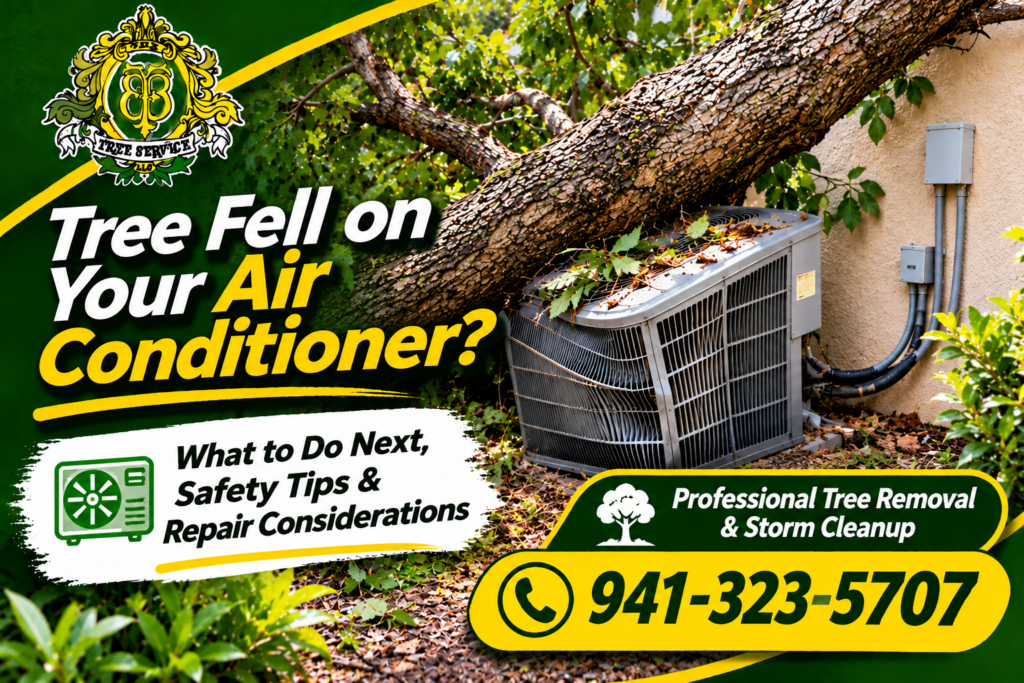
Tree Fell on Your Air Conditioner: Emergency Removal and Damage Guide
What Sarasota and Manatee County homeowners should know about fallen trees, outdoor HVAC units, electrical safety, insurance, and repair coordination.
Safety first: Do not restart damaged cooling equipment or approach downed wires. Contact qualified professionals.
Tree Fell on Your Air Conditioner: Immediate Safety Steps
A fallen branch can crush the outdoor condenser or pull electrical wiring loose. Keep everyone clear and contact emergency services for fire or immediate danger. Do not approach a tree that is still moving or supported by damaged equipment.
An outdoor condenser may sit only a few feet from the wall, leaving limited room to maneuver a heavy trunk. The crew should assess how the wood is supported and where each piece will move. Homeowners should avoid touching the equipment or cutting branches to create access. The proper response is a coordinated plan that addresses electrical safety and tree stability first.
Why Outdoor AC Units Are Vulnerable to Falling Trees
Condensers sit outdoors near trees, fences, and rooflines. Their metal cabinets are not designed to support heavy trunk sections. A minor-looking dent may conceal fan, coil, or electrical damage.
During Southwest Florida storms, saturated soil and gusts can change conditions rapidly. A tree that seems stable after impact may shift as roots settle or branches break. Stay outside the potential fall area and do not approach for close-up photographs. Share observations from a safe location with the responding professionals so they can assess the entire scene.
Stay Away From Damaged Electrical Equipment
Outdoor AC equipment uses electricity that can remain hazardous after impact. Do not touch exposed wiring, metal components, or wet electrical connections. A qualified electrician or HVAC technician should assess the equipment.
Different specialists handle different parts of the problem. A tree service removes and controls wood; an HVAC contractor evaluates cooling equipment; an electrician may address damaged wiring; and a building contractor may assess nearby structural damage. Ask each provider to describe what is included in the estimate and which issues require another trade.
Do Not Restart the Air Conditioner
A damaged system can short circuit or cause mechanical failure when energized. Do not operate the thermostat to test whether cooling still works. Wait for a qualified technician to inspect and authorize operation.
Written documentation can help homeowners coordinate repairs and insurance discussions. Record the location of the tree, visible equipment damage, and contractor findings without entering the hazard zone. Preserve separate estimates for tree work and HVAC service. Coverage and responsibility are specific to the policy and facts, so avoid relying on general assumptions.
Check for Refrigerant and Other Hazards
Refrigerant piping may be damaged by a falling trunk or branch. Avoid touching suspected leaks or attempting to tighten fittings yourself. A licensed HVAC professional should inspect refrigerant components and advise on safety.
Access matters as much as tree size. Fences, pool cages, pavers, buried lines, and soft ground may limit where equipment can operate. Tell the estimator about these conditions and any known utilities. A controlled removal plan can take additional preparation but may reduce the chance of damaging nearby property while the fallen wood is cleared.
Keep Children and Pets Away From the Area
Wood can shift unexpectedly as branches settle or wind changes. Keep people and animals outside the work area. Do not allow anyone to reach beneath the trunk for tools or debris.
An outdoor condenser may sit only a few feet from the wall, leaving limited room to maneuver a heavy trunk. The crew should assess how the wood is supported and where each piece will move. Homeowners should avoid touching the equipment or cutting branches to create access. The proper response is a coordinated plan that addresses electrical safety and tree stability first.
Document Damage Without Moving the Tree
Take wide photographs from a safe location showing the tree and equipment. Preserve the date, weather conditions, and any earlier photos. Do not climb over wood or move the condenser for a better image.
During Southwest Florida storms, saturated soil and gusts can change conditions rapidly. A tree that seems stable after impact may shift as roots settle or branches break. Stay outside the potential fall area and do not approach for close-up photographs. Share observations from a safe location with the responding professionals so they can assess the entire scene.
Contact Your Homeowners Insurance Company
Policy terms determine whether the equipment and debris removal are covered. Report the event promptly and ask about required documentation. Do not assume a deductible or coverage outcome without checking the policy.
Different specialists handle different parts of the problem. A tree service removes and controls wood; an HVAC contractor evaluates cooling equipment; an electrician may address damaged wiring; and a building contractor may assess nearby structural damage. Ask each provider to describe what is included in the estimate and which issues require another trade.
Call an HVAC Professional for Equipment Assessment
An HVAC technician can assess the condenser, lines, controls, and system operation. Damage may extend beyond the visibly crushed cabinet. The tree contractor should not determine whether the system is repairable.
Written documentation can help homeowners coordinate repairs and insurance discussions. Record the location of the tree, visible equipment damage, and contractor findings without entering the hazard zone. Preserve separate estimates for tree work and HVAC service. Coverage and responsibility are specific to the policy and facts, so avoid relying on general assumptions.
When a Tree Service Should Be Contacted
A tree crew can evaluate the weight, tension, and position of fallen wood. The safest sequence depends on nearby electrical and refrigerant hazards. Tree removal and equipment repair should be scoped separately.
Access matters as much as tree size. Fences, pool cages, pavers, buried lines, and soft ground may limit where equipment can operate. Tell the estimator about these conditions and any known utilities. A controlled removal plan can take additional preparation but may reduce the chance of damaging nearby property while the fallen wood is cleared.
How the Tree’s Weight Affects the Condenser
A condenser may be supporting part of the trunk’s weight. Removing one branch can transfer force onto another part of the unit. A qualified crew should evaluate the load before cutting.
An outdoor condenser may sit only a few feet from the wall, leaving limited room to maneuver a heavy trunk. The crew should assess how the wood is supported and where each piece will move. Homeowners should avoid touching the equipment or cutting branches to create access. The proper response is a coordinated plan that addresses electrical safety and tree stability first.
Branches Resting on the AC Fan Grille
A limb across the fan grille can deform the housing and internal components. The grille should not be used as a lifting point. Leave the branch in place until the tree crew plans controlled removal.
During Southwest Florida storms, saturated soil and gusts can change conditions rapidly. A tree that seems stable after impact may shift as roots settle or branches break. Stay outside the potential fall area and do not approach for close-up photographs. Share observations from a safe location with the responding professionals so they can assess the entire scene.
A Large Trunk Across the Outdoor Unit
A heavy trunk may crush the cabinet and underlying support pad. Large sections can roll when cut or lifted. Mechanical assistance or rigging may be appropriate depending on access.
Different specialists handle different parts of the problem. A tree service removes and controls wood; an HVAC contractor evaluates cooling equipment; an electrician may address damaged wiring; and a building contractor may assess nearby structural damage. Ask each provider to describe what is included in the estimate and which issues require another trade.
A Tree That Also Hit the House
The same tree may damage roof framing, gutters, and HVAC equipment. Keep clear of unstable building elements as well as wood. A building professional may be needed before the tree is moved.
Written documentation can help homeowners coordinate repairs and insurance discussions. Record the location of the tree, visible equipment damage, and contractor findings without entering the hazard zone. Preserve separate estimates for tree work and HVAC service. Coverage and responsibility are specific to the policy and facts, so avoid relying on general assumptions.
An Uprooted Tree Beside the Condenser
An uprooted tree may have an unstable root plate near the equipment. Root movement can disturb buried lines or irrigation. Stay away from the root mass and discuss stump work separately.
Access matters as much as tree size. Fences, pool cages, pavers, buried lines, and soft ground may limit where equipment can operate. Tell the estimator about these conditions and any known utilities. A controlled removal plan can take additional preparation but may reduce the chance of damaging nearby property while the fallen wood is cleared.
Broken Limbs Still Hanging Over the Equipment
A branch that struck the unit may leave torn attachments overhead. Hanging wood can fall while the condenser is being inspected. A tree professional should assess the remaining canopy.
An outdoor condenser may sit only a few feet from the wall, leaving limited room to maneuver a heavy trunk. The crew should assess how the wood is supported and where each piece will move. Homeowners should avoid touching the equipment or cutting branches to create access. The proper response is a coordinated plan that addresses electrical safety and tree stability first.
Why You Should Not Pull Wood Off With a Truck
Tow straps can drag wood across equipment and rupture piping. Cables or attachment points can fail under load. Do not improvise vehicle-based recovery.
During Southwest Florida storms, saturated soil and gusts can change conditions rapidly. A tree that seems stable after impact may shift as roots settle or branches break. Stay outside the potential fall area and do not approach for close-up photographs. Share observations from a safe location with the responding professionals so they can assess the entire scene.
Why DIY Chainsaw Removal Can Be Dangerous
Bent branches can store energy that releases during cutting. A chainsaw can bind or kick back in storm-damaged wood. Leave heavy, tensioned sections to qualified personnel.
Different specialists handle different parts of the problem. A tree service removes and controls wood; an HVAC contractor evaluates cooling equipment; an electrician may address damaged wiring; and a building contractor may assess nearby structural damage. Ask each provider to describe what is included in the estimate and which issues require another trade.
Professional Tree Removal Around HVAC Equipment
Crews assess wood position, surrounding hazards, access, and equipment. They may dismantle smaller sections before moving heavy pieces. The aim is controlled removal with minimal additional damage.
Written documentation can help homeowners coordinate repairs and insurance discussions. Record the location of the tree, visible equipment damage, and contractor findings without entering the hazard zone. Preserve separate estimates for tree work and HVAC service. Coverage and responsibility are specific to the policy and facts, so avoid relying on general assumptions.
When Controlled Rigging May Be Necessary
Rigging can help lower sections without dropping them on the unit. Equipment choice depends on load, access, soil, and utilities. A crane is not automatically necessary for every job.
Access matters as much as tree size. Fences, pool cages, pavers, buried lines, and soft ground may limit where equipment can operate. Tell the estimator about these conditions and any known utilities. A controlled removal plan can take additional preparation but may reduce the chance of damaging nearby property while the fallen wood is cleared.
Protecting Refrigerant Lines During Removal
Copper refrigerant lines may run along the wall or underground. A trunk or equipment route can damage these connections. Identify known line locations and let HVAC personnel evaluate exposed damage.
An outdoor condenser may sit only a few feet from the wall, leaving limited room to maneuver a heavy trunk. The crew should assess how the wood is supported and where each piece will move. Homeowners should avoid touching the equipment or cutting branches to create access. The proper response is a coordinated plan that addresses electrical safety and tree stability first.
Electrical Disconnects and Service Panels
A disconnect box may be mounted close to the condenser. Impact can damage its cover, conduit, or wiring. Only qualified personnel should evaluate and isolate unsafe equipment.
During Southwest Florida storms, saturated soil and gusts can change conditions rapidly. A tree that seems stable after impact may shift as roots settle or branches break. Stay outside the potential fall area and do not approach for close-up photographs. Share observations from a safe location with the responding professionals so they can assess the entire scene.
Damage to the Concrete AC Pad
A fallen tree can crack or shift the condenser’s support slab. An uneven pad can complicate equipment installation or operation. An HVAC installer or appropriate contractor should evaluate the base.
Different specialists handle different parts of the problem. A tree service removes and controls wood; an HVAC contractor evaluates cooling equipment; an electrician may address damaged wiring; and a building contractor may assess nearby structural damage. Ask each provider to describe what is included in the estimate and which issues require another trade.
Crushed Ductwork and Nearby Equipment
Branches can strike nearby ductwork, mini-split components, or heat-pump lines. The visible outdoor cabinet may not be the only damaged component. Ask the HVAC technician to assess the full affected system.
Written documentation can help homeowners coordinate repairs and insurance discussions. Record the location of the tree, visible equipment damage, and contractor findings without entering the hazard zone. Preserve separate estimates for tree work and HVAC service. Coverage and responsibility are specific to the policy and facts, so avoid relying on general assumptions.
What an HVAC Inspection May Include
An inspection may include visual condition, electrical safety, and refrigerant integrity. Testing should occur only when the technician considers it safe. Request a written explanation of observed damage and recommended work.
Access matters as much as tree size. Fences, pool cages, pavers, buried lines, and soft ground may limit where equipment can operate. Tell the estimator about these conditions and any known utilities. A controlled removal plan can take additional preparation but may reduce the chance of damaging nearby property while the fallen wood is cleared.
Repairing Versus Replacing a Damaged AC Unit
Repairability depends on equipment age, model, damage, and parts availability. A crushed coil or cabinet may require extensive work. A qualified HVAC contractor should compare repair and replacement options.
An outdoor condenser may sit only a few feet from the wall, leaving limited room to maneuver a heavy trunk. The crew should assess how the wood is supported and where each piece will move. Homeowners should avoid touching the equipment or cutting branches to create access. The proper response is a coordinated plan that addresses electrical safety and tree stability first.
Can the System Run While Waiting for Repairs?
Do not assume indoor cooling can continue after outdoor equipment is damaged. Running the system could worsen a fault or create hazards. Follow the HVAC professional’s instructions about safe operation.
During Southwest Florida storms, saturated soil and gusts can change conditions rapidly. A tree that seems stable after impact may shift as roots settle or branches break. Stay outside the potential fall area and do not approach for close-up photographs. Share observations from a safe location with the responding professionals so they can assess the entire scene.
Temporary Cooling Options After a Storm
Florida heat can make a cooling outage uncomfortable and potentially dangerous. Use safe alternative cooling and check on vulnerable household members. Avoid operating generators indoors or near openings because of carbon monoxide.
Different specialists handle different parts of the problem. A tree service removes and controls wood; an HVAC contractor evaluates cooling equipment; an electrician may address damaged wiring; and a building contractor may assess nearby structural damage. Ask each provider to describe what is included in the estimate and which issues require another trade.
Does Insurance Cover Tree Damage to an AC Unit?
Homeowners policies differ on covered perils, equipment, and exclusions. Ask about tree debris, HVAC replacement, and emergency mitigation separately. Keep tree removal and HVAC estimates as distinct records.
Written documentation can help homeowners coordinate repairs and insurance discussions. Record the location of the tree, visible equipment damage, and contractor findings without entering the hazard zone. Preserve separate estimates for tree work and HVAC service. Coverage and responsibility are specific to the policy and facts, so avoid relying on general assumptions.
What if the Tree Came From a Neighbor’s Yard?
A tree rooted next door does not automatically make that owner liable. Prior condition, warnings, and storm circumstances can matter. Consult insurers or qualified Florida counsel for disputed responsibility.
Access matters as much as tree size. Fences, pool cages, pavers, buried lines, and soft ground may limit where equipment can operate. Tell the estimator about these conditions and any known utilities. A controlled removal plan can take additional preparation but may reduce the chance of damaging nearby property while the fallen wood is cleared.
What if the Tree Was Dead Before It Fell?
Visible decay or dead branches may be relevant evidence. Their presence does not by itself establish negligence. Preserve earlier photographs and written communications when available.
An outdoor condenser may sit only a few feet from the wall, leaving limited room to maneuver a heavy trunk. The crew should assess how the wood is supported and where each piece will move. Homeowners should avoid touching the equipment or cutting branches to create access. The proper response is a coordinated plan that addresses electrical safety and tree stability first.
What if a Healthy Tree Fell in a Storm?
Strong winds and saturated soil can topple apparently healthy trees. Hidden defects may be difficult to identify after failure. Avoid definite claims about responsibility based only on appearance.
During Southwest Florida storms, saturated soil and gusts can change conditions rapidly. A tree that seems stable after impact may shift as roots settle or branches break. Stay outside the potential fall area and do not approach for close-up photographs. Share observations from a safe location with the responding professionals so they can assess the entire scene.
What Affects the Cost of Tree Removal?
Tree size, position, access, and equipment affect the removal scope. Electrical and HVAC hazards may require specialist coordination. Request a site-specific written estimate instead of generic pricing.
Different specialists handle different parts of the problem. A tree service removes and controls wood; an HVAC contractor evaluates cooling equipment; an electrician may address damaged wiring; and a building contractor may assess nearby structural damage. Ask each provider to describe what is included in the estimate and which issues require another trade.
What a Written Tree Removal Estimate Should Include
Clarify which sections of the tree will be removed. Ask whether debris hauling, stump grinding, and cleanup are included. Document any additional work authorization when conditions change.
Written documentation can help homeowners coordinate repairs and insurance discussions. Record the location of the tree, visible equipment damage, and contractor findings without entering the hazard zone. Preserve separate estimates for tree work and HVAC service. Coverage and responsibility are specific to the policy and facts, so avoid relying on general assumptions.
Debris Hauling and Cleanup Around the Unit
Branches and logs may obstruct HVAC technicians and equipment replacement. Agree on where debris will be stacked or hauled. Tree debris removal may not include damaged HVAC parts.
Access matters as much as tree size. Fences, pool cages, pavers, buried lines, and soft ground may limit where equipment can operate. Tell the estimator about these conditions and any known utilities. A controlled removal plan can take additional preparation but may reduce the chance of damaging nearby property while the fallen wood is cleared.
Stump Grinding Near Underground Utilities
Stumps can be close to buried electrical and refrigerant lines. Grinding and excavation require careful utility awareness. Confirm the location of services and whether stump work is included.
An outdoor condenser may sit only a few feet from the wall, leaving limited room to maneuver a heavy trunk. The crew should assess how the wood is supported and where each piece will move. Homeowners should avoid touching the equipment or cutting branches to create access. The proper response is a coordinated plan that addresses electrical safety and tree stability first.
Preventing Future Tree Damage to HVAC Systems
No maintenance program guarantees that trees will withstand storms. Routine assessment can identify deadwood, new leaning, and defects. Consider mature tree size when placing equipment or planting nearby.
During Southwest Florida storms, saturated soil and gusts can change conditions rapidly. A tree that seems stable after impact may shift as roots settle or branches break. Stay outside the potential fall area and do not approach for close-up photographs. Share observations from a safe location with the responding professionals so they can assess the entire scene.
Tree Pruning Around Outdoor Equipment
Pruning can address branches that conflict with equipment access. Avoid topping or indiscriminate cutting that harms tree structure. A qualified professional can recommend species-appropriate work.
Different specialists handle different parts of the problem. A tree service removes and controls wood; an HVAC contractor evaluates cooling equipment; an electrician may address damaged wiring; and a building contractor may assess nearby structural damage. Ask each provider to describe what is included in the estimate and which issues require another trade.
Palm Trees Near Air Conditioning Units
Palm fronds can fall into condenser fans or block service access. Large palm crown sections may also damage equipment. Use appropriate palm care rather than excessive removal of healthy fronds.
Written documentation can help homeowners coordinate repairs and insurance discussions. Record the location of the tree, visible equipment damage, and contractor findings without entering the hazard zone. Preserve separate estimates for tree work and HVAC service. Coverage and responsibility are specific to the policy and facts, so avoid relying on general assumptions.
Oak and Pine Trees Near Condensers
Oaks can extend large limbs over mechanical equipment. Pines may reach units from farther away when they fall. Assess actual condition and site targets rather than assuming species alone predicts risk.
Access matters as much as tree size. Fences, pool cages, pavers, buried lines, and soft ground may limit where equipment can operate. Tell the estimator about these conditions and any known utilities. A controlled removal plan can take additional preparation but may reduce the chance of damaging nearby property while the fallen wood is cleared.
Sarasota and Manatee County Storm Considerations
Heavy rain and wind can affect trees across Southwest Florida. Saturated ground may complicate equipment access and tree stability. Describe the site conditions to contractors before scheduling work.
An outdoor condenser may sit only a few feet from the wall, leaving limited room to maneuver a heavy trunk. The crew should assess how the wood is supported and where each piece will move. Homeowners should avoid touching the equipment or cutting branches to create access. The proper response is a coordinated plan that addresses electrical safety and tree stability first.
HOA and Condominium Equipment Areas
Shared HVAC areas can involve association rules and multiple owners. Managers should restrict access and clarify repair responsibility. Review governing documents and insurance arrangements as appropriate.
During Southwest Florida storms, saturated soil and gusts can change conditions rapidly. A tree that seems stable after impact may shift as roots settle or branches break. Stay outside the potential fall area and do not approach for close-up photographs. Share observations from a safe location with the responding professionals so they can assess the entire scene.
Local Tree Removal and Repair Requirements
Tree removal and mechanical repairs may trigger different local requirements. Emergency circumstances do not automatically eliminate every rule. Confirm applicable requirements with the local authority or qualified contractor.
Different specialists handle different parts of the problem. A tree service removes and controls wood; an HVAC contractor evaluates cooling equipment; an electrician may address damaged wiring; and a building contractor may assess nearby structural damage. Ask each provider to describe what is included in the estimate and which issues require another trade.
Coordinating the Tree Crew and HVAC Contractor
The tree crew and HVAC contractor may need to coordinate their sequence. Electrical hazards should be addressed before ordinary cutting proceeds. Clear written scopes help avoid further equipment damage.
Written documentation can help homeowners coordinate repairs and insurance discussions. Record the location of the tree, visible equipment damage, and contractor findings without entering the hazard zone. Preserve separate estimates for tree work and HVAC service. Coverage and responsibility are specific to the policy and facts, so avoid relying on general assumptions.
Final Takeaway: Safe Removal Before Restarting Cooling
Keep people clear of unstable wood and damaged electrical equipment. Arrange qualified tree removal before attempting HVAC restart or repair. TBB Tree Service can discuss tree-related removal estimates in Sarasota and Manatee County.
Access matters as much as tree size. Fences, pool cages, pavers, buried lines, and soft ground may limit where equipment can operate. Tell the estimator about these conditions and any known utilities. A controlled removal plan can take additional preparation but may reduce the chance of damaging nearby property while the fallen wood is cleared.
Related TBB Tree Service Guides
Read trees falling on garages, trees falling on sheds, trees damaging pool cages, trees near power lines, cracked tree trunks, hanging storm-damaged limbs, leaning trees near homes, and free tree service estimates.
Independent Safety and Tree Care Resources
Consult OSHA tree care safety, OSHA electrical safety, and ISA tree owner resources. HVAC inspection and repair require qualified mechanical professionals.
Frequently Asked Questions
Can a fallen tree damage an AC condenser?
Yes. Branches and trunks can damage the cabinet, fan, coils, wiring, and piping.
Should I turn on the AC to see if it works?
No. Have qualified HVAC personnel assess the equipment first.
Can I pull the branch off the unit myself?
Avoid moving heavy or tensioned wood; it can shift unexpectedly.
Does homeowners insurance cover tree damage to an AC unit?
Coverage varies by policy and circumstances. Ask your insurer.
Who pays if a neighbor’s tree hit the condenser?
Responsibility is fact-specific and not determined solely by tree ownership.
Will the tree service fix the air conditioner?
Tree removal and HVAC repair are separate services.
What if refrigerant lines are broken?
Stay away from suspected leaks and contact a qualified HVAC technician.
Is stump grinding included in removal?
Not necessarily. Confirm it in the written estimate.
Can I use a generator for cooling?
Use generators only outdoors in accordance with safety guidance; never indoors or near openings.
How much does removal cost?
The tree’s size, position, hazards, access, and cleanup determine the estimate.