Tree Fell on Your Solar Panels: Emergency Removal, Damage, and Insurance
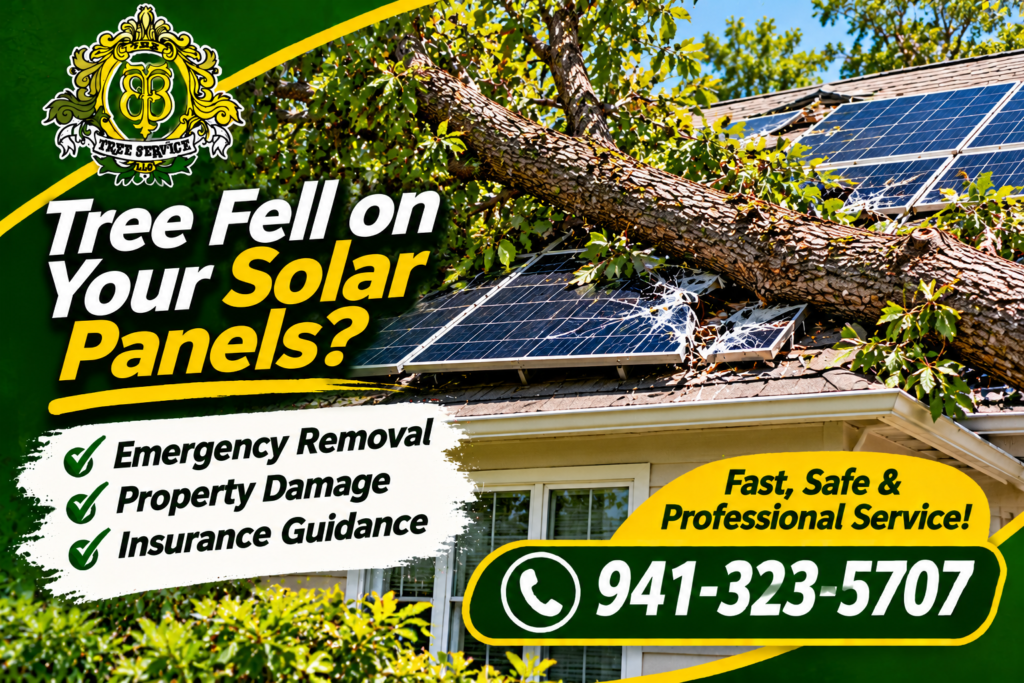
Tree Fell on Your Solar Panels: Emergency Removal, Damage, and Insurance
A Sarasota and Manatee County homeowner guide to electrical safety, tree removal, solar-panel repairs, and insurance questions.
Safety first: Solar panels can remain energized in daylight. Do not touch damaged modules or wiring.
Tree Fell on Your Solar Panels: What to Do First
A fallen tree can damage roof-mounted solar panels, electrical conductors, mounting rails, and the roof beneath them. Keep people away from the building and fallen wood. Do not climb onto the roof, pull branches from the array, or touch exposed cables. If there is fire, sparking, injury, or immediate danger, contact emergency services.
Solar equipment can produce electricity when exposed to light, even when household power is interrupted. A qualified solar technician or electrician should assess electrical hazards before anyone approaches the affected array. The tree-removal crew should know where the panels and wiring are located.
Why Solar Panels Require Special Precautions
A roof-mounted solar array combines glass modules, metal frames, wiring, and mounting hardware. Impact damage may not be limited to broken glass; conductors and connectors beneath panels can be affected. The weight of a fallen trunk may also compromise roof framing.
Solar electrical hazards cannot be assessed by looking at a panel from the ground. Do not assume that turning off a wall switch makes every part of the array safe. Qualified personnel should determine appropriate isolation and work boundaries.
Do Not Touch Broken Solar Panel Glass
Solar modules may fracture into many sharp pieces after impact. Damaged glass can conceal live electrical components, and fragments can slide off the roof. Do not handle debris with bare hands or attempt to sweep the panels while branches remain overhead.
Keep children, pets, and visitors away from the impact zone. The solar contractor should advise on safe removal and disposal of damaged modules. Tree crews should coordinate rather than treat the array as ordinary roofing debris.
Solar Panels Can Remain Energized in Daylight
Photovoltaic modules generate electrical power from light. Certain shutdown equipment can reduce hazards in parts of a system, but homeowners should not assume that every conductor becomes harmless after a shutdown command. Damaged equipment may behave unpredictably.
Only appropriately qualified electrical or solar personnel should evaluate the affected system. The tree service should not cut or move wood across the array until the necessary electrical precautions are established.
Watch for Roof and Structural Damage
A large branch can puncture roofing, bend mounting rails, and transfer force into rafters or trusses. The roof may appear intact from the driveway while hidden connections are damaged. Additional branches can remain suspended above the panels.
Do not enter an attic beneath suspected structural damage or climb onto the roof for photographs. A qualified roofing or structural professional should evaluate concerns after the tree is controlled. Keep people away from ceilings showing sagging or fresh cracks.
Photograph the Scene From a Safe Location
Wide photographs can document the tree, roof, array, and surrounding property without entering the hazard zone. Record the approximate date, storm conditions, and visible damage. Earlier photos of the panels and tree can also be useful.
Avoid standing below broken modules or hanging limbs to obtain close-ups. Save reports from the solar technician, tree contractor, and insurer separately. Documentation supports coordination but must never take priority over safety.
Call the Solar Installer or Qualified Electrician
The solar installer may know the array layout, inverter, disconnects, and equipment specifications. Explain that a tree has struck the modules or nearby wiring and ask for a safe inspection process. If the original installer is unavailable, contact a qualified solar service provider.
Do not restart the system simply because an app shows an error or a breaker has tripped. A technician should assess the actual damage and explain what can safely operate. Tree removal and electrical restoration are different scopes.
Contact Your Homeowners Insurance Carrier
Homeowners insurance may address certain solar-panel damage, but coverage depends on policy language, ownership arrangements, cause of loss, and exclusions. Leased or third-party-owned systems can involve separate agreements. Report the event and ask what documentation is required.
Request clarification about roof repairs, tree debris removal, and solar equipment replacement. Keep written estimates for each trade. Neither the tree service nor the solar installer can guarantee the outcome of a claim.
What if the Panels Are Leased?
Leased solar systems and power purchase agreements may specify who owns the equipment, maintains it, and handles damage claims. The homeowner’s responsibilities may differ from those for an owned array. Do not remove or replace modules without understanding the agreement.
Contact the solar provider and insurer promptly. Ask which company authorizes electrical work and replacement equipment. Tree removal may still need coordination with the provider to prevent further damage.
Branches Resting Across Solar Modules
Even a relatively small limb can crack glass or dislodge panel hardware. A branch may be supported by the mounting rails or connected to a standing tree. Moving it by hand can shift the load and create falling or electrical hazards.
A qualified tree crew should plan how to lift or section the wood after electrical safety is addressed. The solar technician should inspect the array before it is returned to service. Visible scratches alone do not establish the condition of internal components.
A Heavy Trunk Across the Solar Array
A mature trunk can crush multiple modules and damage the roof beneath. Its weight may be distributed across rails, roofing, and nearby branches. Cutting one section can cause another to settle unexpectedly.
Controlled rigging or lifting may be necessary depending on access and load. The tree crew should consider where each section will move before cutting. Homeowners should not use vehicles, winches, or improvised jacks to pull the trunk from the roof.
Hanging Limbs Above Damaged Panels
Storms can leave broken limbs caught in the remaining canopy. These branches may fall later or move when the main tree is dismantled. The hazard extends beyond the wood currently touching the panels.
A qualified tree professional should inspect the entire damaged tree from a safe position. The work zone may include the yard, driveway, and nearby roof areas. Avoid walking below suspended branches even after the initial impact.
Why DIY Chainsaw Removal Is Dangerous
Storm-damaged wood may contain tension that releases when cut. A branch can spring toward the operator or drop onto electrical equipment. Roof surfaces add fall hazards, while broken panels and wiring create additional risks.
Do not cut from a ladder or climb onto the roof to reach a limb. A professional crew should determine the cutting sequence and coordinate with electrical specialists. A quick cut can create a much larger problem.
How Professional Tree Removal Is Planned
The tree crew evaluates trunk size, branch tension, roof position, equipment access, and nearby utilities. It may remove smaller pieces before controlling larger sections. A safe plan considers both the damaged solar array and the underlying building.
Ask the contractor to explain the tree-removal scope and whether hauling is included. Electrical isolation, panel replacement, and roof repairs should be handled by appropriately qualified specialists. Clear sequencing helps avoid conflicting work on the same roof.
When Rigging or Crane Equipment May Be Needed
Some tree sections are too heavy to lower by hand without risking further roof damage. Rigging or mechanical lifting can help control movement, but equipment selection depends on the site. A crane is not automatically needed for every solar-panel impact.
Access restrictions, soil conditions, and overhead wires affect equipment choices. Request a site-specific estimate rather than assuming a photograph reveals the full complexity. Qualified operators and careful planning remain essential.
Protecting Solar Wiring During Tree Removal
Solar conductors may run beneath modules, through conduit, or into an attic or exterior wall. A fallen trunk can pinch wiring where it is not visible. Moving wood across these routes may create new damage.
Tell the tree crew where equipment and conduit are located, using installer documentation if available. Only qualified electrical personnel should assess or handle damaged conductors. The crew should avoid using solar mounting hardware as a rigging anchor.
Roof Mounts and Flashing Damage
Solar mounting points are integrated with roofing materials and weatherproofing details. An impact can bend rails or disturb flashing, potentially allowing water entry. Even undamaged-looking modules may sit on compromised supports.
A qualified solar installer and roofer should inspect the mounting system and roof penetrations. Reattaching a panel without addressing damaged mounts may not restore safe performance or weather protection.
What if the Tree Also Damaged the Inverter?
An inverter or related electrical equipment may be mounted on an exterior wall, inside a garage, or near the array. A falling tree can strike enclosures or pull conduit. Damage may be electrical even when the unit’s case looks intact.
Do not open or reset damaged equipment. A qualified technician should inspect the inverter, disconnects, and connections. The tree service should be told about nearby electrical boxes before moving logs or equipment.
Battery Storage Systems and Tree Damage
Homes with solar batteries may have additional electrical equipment and manufacturer-specific emergency procedures. Impact, water intrusion, or damaged wiring can create hazards. Battery equipment should not be treated as ordinary storage boxes.
Keep clear of damaged battery systems and contact the manufacturer-approved service provider or emergency responders when warranted. The tree-removal plan must account for the location of battery equipment and associated conduits.
What if a Tree Fell During a Power Outage?
A utility outage does not mean a solar array or battery system is electrically harmless. Some systems can operate in backup configurations, while photovoltaic modules can continue producing power in sunlight. Never infer safety from dark lights inside the house.
Report downed utility lines to the electric utility and keep away from them. Solar electrical personnel should establish the safe work conditions before tree removal near damaged equipment.
Can Damaged Solar Panels Be Repaired?
Some problems involve replaceable mounts or wiring, while cracked or severely damaged modules may require replacement. Repairability depends on equipment design, availability, warranties, and the extent of damage. A tree contractor cannot diagnose panel performance.
Ask the solar technician for a written assessment of affected components and options. A damaged array should not be returned to service solely because some panels still produce electricity.
Replacing Individual Modules Versus an Entire Array
A single damaged panel may be replaceable, but matching electrical specifications, mounting compatibility, and equipment availability matter. Older arrays may present additional challenges. The best approach depends on the system design and the extent of impact.
The solar contractor should explain whether localized replacement is appropriate or broader work is needed. Ask how any proposed changes affect warranties, permitting, and system monitoring.
Solar Monitoring Errors After an Impact
An app may report reduced output, inverter faults, or missing module data after a tree strike. These alerts can help identify a problem but do not establish that the system is safe. A lack of alerts also does not prove there is no damage.
Save screenshots for the technician and insurer, then leave the equipment alone. Qualified inspection should determine the cause and whether the system can safely operate.
Temporary Weather Protection for the Roof
Once the tree is safely removed, roof openings may need temporary protection from rain. Tarping should be performed only when the structure and electrical conditions permit safe access. Do not climb onto a damaged solar roof.
A qualified roofer or restoration contractor can advise on suitable mitigation. Coordinate with the solar contractor because modules may need removal before roof repairs. Keep records of authorized emergency work.
Water Intrusion Beneath Solar Panels
A branch may damage shingles or flashing beneath the array without creating a visible hole from the ground. Water intrusion can affect insulation, ceilings, and electrical components. Heavy Florida rain may make delayed repairs more consequential.
A roofer should assess the building envelope, and electrical specialists should evaluate affected wiring. Do not enter an area with sagging ceilings or exposed conductors. Separate reports can help identify which repairs are necessary.
Does Insurance Pay for Fallen Tree Removal?
Some policies provide debris-removal coverage when a tree damages covered property, but limits and conditions vary. Coverage for the tree itself may differ from coverage for solar panels or roofing. Ask the insurer about each category.
Keep separate invoices for tree cutting, hauling, roof work, and solar service. A contractor’s estimate documents proposed work but does not guarantee reimbursement.
What if the Tree Came From a Neighbor’s Yard?
A tree rooted on neighboring property can strike your solar array, but location alone does not automatically establish liability. Prior tree condition, warnings, storm circumstances, and applicable Florida law may matter.
Document the scene safely and communicate factually with the neighbor. Ask your insurer about the claim and consult qualified legal counsel if responsibility is disputed. Obtain permission before crews enter another property.
What if the Tree Was Dead Before It Fell?
Dead branches, dieback, and visible decay can be relevant to understanding prior tree condition. These signs do not automatically establish legal negligence or the precise cause of failure. Earlier photographs and documented communications may be useful.
A qualified tree professional can document visible conditions while insurers or attorneys address liability. Do not delay urgent hazard control while gathering evidence that would require unsafe access.
What if a Healthy Tree Fell in a Storm?
Strong wind, saturated soil, or hidden defects can contribute to failure even when a tree appeared healthy. A post-storm photograph may not show what happened underground or within the trunk. Avoid confident claims about fault without supporting evidence.
Focus on safe removal, documentation, and qualified assessment. Insurance and legal questions should be handled separately from the immediate physical hazards.
How Much Does Tree Removal From Solar Panels Cost?
The cost depends on tree size, position, roof height, access, equipment, electrical hazards, and debris handling. A small branch on a low roof differs from a mature oak trunk across a large array. No universal price accurately describes every job.
Request a written site-specific tree estimate. Solar electrical work, panel replacement, roofing, and structural repairs are generally separate costs. Confirm what each contractor will do.
What Should a Written Removal Estimate Include?
A clear estimate identifies the tree, cutting scope, access route, equipment, debris hauling, and exclusions. It should also explain whether the crew needs solar or utility coordination before work begins.
Ask whether stump grinding is included and how unexpected conditions will be handled. Written scopes are particularly important when several trades share a work area.
Narrow Access and Equipment Challenges
Solar-equipped homes may have tight side yards, fences, pool cages, and limited crane access. Heavy rain can soften the ground and affect machinery placement. Roof height and overhead lines can further constrain options.
Tell the estimator about gates, pavers, irrigation, septic components, and buried utilities. Access planning can reduce the risk of secondary property damage during removal.
Protecting Driveways, Pavers, and Landscaping
Logs and equipment can damage paving, lawns, and garden beds if handling is not planned. The crew should consider where wood will be lowered and how debris will leave the property.
Photograph existing damage when safe and ask about practical protection measures. No method guarantees zero incidental impact, but a careful work plan matters.
Stump Grinding After a Fallen Tree
Removing a fallen trunk does not automatically include grinding the stump. Uprooted trees may leave a root plate and hole requiring separate work. Underground electrical, irrigation, or other services may be nearby.
Discuss grinding, debris disposal, and backfilling in advance. Appropriate utility-location procedures should precede excavation. Solar-related underground conduits should be identified before stump work.
Should the Remaining Tree Be Removed?
If only a large branch fell, the remaining tree may be suitable for retention or may have defects requiring further evaluation. A branch failure alone does not prove that complete removal is necessary.
A qualified tree professional can assess the remaining trunk, crown, roots, and nearby targets. Avoid topping or excessive pruning as a quick fix. Decisions should be based on actual condition.
Inspect Other Trees Around the Solar Roof
Nearby trees may have hanging limbs, fresh cracks, or new leaning after a storm. Branches can also shade panels without being hazardous. Distinguish solar performance concerns from structural tree risk.
Observe from the ground and seek professional assessment for significant changes. Do not cut branches near power lines or damaged solar equipment yourself.
Tree Pruning to Reduce Future Conflicts
Appropriate pruning can manage some branches growing toward a roof, but excessive cutting can harm tree health or structure. The objective is sound, species-appropriate maintenance rather than eliminating every limb above a property.
A qualified professional can discuss pruning intervals, branch attachments, and mature growth. No pruning plan guarantees that a tree will withstand hurricanes.
Solar Panel Shading Versus Tree Safety
A tree can shade panels without posing an immediate safety concern. Removing a healthy mature tree solely to improve production is a separate decision with landscape and environmental tradeoffs. Solar output and tree condition should be evaluated independently.
Ask the solar provider for production data and a tree professional for pruning or removal options. Avoid aggressive topping to increase sunlight; it can create poor regrowth and future maintenance problems.
Palm Trees Near Solar Panels
Palm fronds can fall onto modules, while tall palms may pose greater risks if a trunk or crown section fails. Palm pruning practices vary by species, and excessive removal of healthy green fronds is not recommended.
Assess the palm’s condition and position rather than assuming every frond is dangerous. Do not climb near electrical equipment or remove fronds from a damaged array.
Oak and Pine Trees Near Solar Roofs
Large oak limbs and tall pines can affect solar roofs in different ways. Species alone does not determine whether a tree is hazardous. Structural defects, rooting conditions, prior damage, and nearby targets are more useful factors.
A qualified tree professional can evaluate individual trees and recommend appropriate maintenance. Avoid blanket removal recommendations based only on height or proximity.
HOA and Neighborhood Considerations
Some communities regulate tree removal, roof changes, and contractor access. Solar systems may also have association-related procedures. Emergency safety work and permanent reconstruction can involve different approvals.
Confirm applicable requirements with the association and local authority. Keep hazardous areas closed while administrative questions are resolved. Document the incident and obtain necessary property access permissions.
Permits for Solar and Roof Repairs
Tree removal, roofing, and electrical solar work may involve separate local requirements. Emergency circumstances can affect procedures but do not automatically eliminate every permit or inspection.
Ask the appropriate Sarasota or Manatee County authority and qualified contractors about current rules. A tree service should not promise that electrical or building approvals are unnecessary.
Sarasota and Manatee County Storm Conditions
Strong winds, heavy rain, and saturated soil can affect oaks, pines, palms, and other trees across Sarasota, Bradenton, Lakewood Ranch, Parrish, Venice, and Palmetto. Equipment access and roof configuration differ from property to property.
A local site assessment helps determine how to control the wood while accounting for nearby buildings, electrical systems, and landscaping. Share details about the array and any known hazards when requesting service.
Coordinating the Tree Crew, Solar Technician, and Roofer
The safest sequence often requires electrical assessment before tree cutting near the damaged array, followed by controlled wood removal and structural or solar repairs. The exact order depends on the hazards identified on site.
Ask each contractor to define responsibilities and communicate before work begins. Written estimates and clear scheduling help prevent one trade from interfering with another’s work.
Final Takeaway: Electrical Safety Before Tree Cleanup
A tree on solar panels presents both falling-wood and electrical hazards. Keep everyone away, do not touch broken modules or wiring, and contact qualified solar or electrical personnel. Arrange controlled tree removal only after the necessary safety precautions are established.
TBB Tree Service can discuss tree-related removal estimates in Sarasota and Manatee County. Solar, roofing, structural, and insurance questions should be handled by the appropriate specialists.
Related TBB Tree Service Guides
Explore trees falling on garages, trees damaging air conditioners, branches touching roofs, trees near power lines, hanging limbs after storms, cracked tree trunks, leaning trees near houses, and tree service estimates.
Independent Electrical and Tree Safety Resources
See OSHA electrical safety, OSHA tree care safety, and U.S. Department of Energy solar homeowner guidance. Qualified solar personnel should evaluate damaged electrical systems.
Frequently Asked Questions
Can broken solar panels still produce electricity?
Yes. Photovoltaic modules can generate electricity when exposed to light; qualified personnel should assess damaged equipment.
Should I turn off the solar system myself?
Do not approach damaged wiring or equipment. Follow qualified electrical or emergency guidance.
Can I pull a branch off my solar panels?
No. Wood can shift and damaged panels may present electrical and falling-glass hazards.
Does homeowners insurance cover tree damage to solar panels?
Coverage depends on the policy, ownership arrangement, and circumstances.
Who pays if a neighbor’s tree falls on my panels?
Responsibility depends on the facts and applicable law.
Will a tree service replace the solar panels?
Tree removal and solar electrical repairs are separate scopes.
Can I restart the system after the tree is removed?
Wait until qualified solar or electrical personnel inspect and authorize operation.
How much does tree removal from solar panels cost?
Cost depends on tree size, access, equipment, and hazards; request an on-site estimate.
Is stump grinding included?
Not necessarily. Confirm it in the written scope.
Should I prune nearby trees to prevent future damage?
Appropriate pruning may help manage some conflicts, but no maintenance guarantees storm resistance.