Tree Roots Lifting Your Pool Deck: Should You Cut the Roots or Remove the Tree?
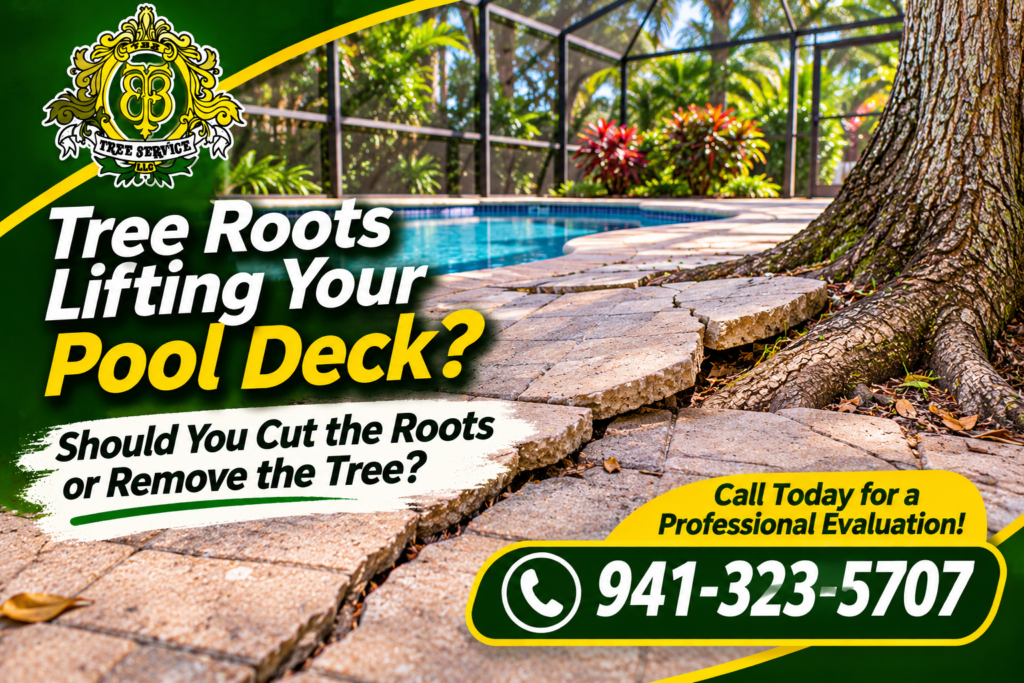
Tree Roots Lifting Your Pool Deck: Should You Cut the Roots or Remove the Tree?
A practical Sarasota and Manatee County homeowner guide to raised pavers, cracked concrete, root pruning, tree removal, and safe pool deck repairs.
Tree Roots Lifting Your Pool Deck: What Should You Do?
Raised pavers, uneven concrete, and widening joints around a swimming pool can have several causes, including growing roots, settlement, drainage changes, or construction defects. A nearby tree is a clue, not proof. Before removing a tree or cutting a root, identify what is actually moving and whether the pool shell, plumbing, or electrical equipment is affected.
The safest approach begins with observation and qualified assessment. A tree professional can evaluate the root zone and tree health, while a pool or concrete contractor can examine the deck and its construction. These specialists answer different questions, and both perspectives matter when deciding whether to repair the surface, manage roots, or remove a tree.
Why Roots Can Raise Pavers
Roots increase in diameter as they grow, and shallow roots can displace nearby pavers or bedding materials. Movement often appears as a ridge following a root’s path, but paver settlement or erosion can create similar unevenness. Roots also respond to soil moisture and available oxygen, which vary across a yard.
Lifting one loose paver may reveal a root, but homeowners should avoid digging aggressively around major roots. Document the pattern of movement and ask a qualified professional to identify the likely cause. The presence of a root does not automatically mean it should be severed.
Concrete Pool Deck Cracks and Roots
Concrete slabs may crack because of soil movement, shrinkage, inadequate support, or root growth. A crack beside a tree does not establish that the tree caused it. The location, direction, elevation change, and history of the crack can help a qualified contractor narrow down possibilities.
Photograph the crack with a ruler for scale and record whether it changes over time. Do not assume that filling the surface will resolve ongoing movement. A deck contractor can determine whether repair, replacement, or further investigation is appropriate.
Uneven Pool Decks Are a Trip Hazard
Even a modest elevation difference can catch a foot, particularly around wet pool areas where people may be barefoot. Loose pavers and cracked concrete can also create sharp edges. Restrict access to hazardous sections until they are assessed and made safe.
Avoid placing temporary boards or mats that could slide into the pool or create another hazard. A qualified deck professional can recommend appropriate temporary controls and lasting repairs. Tree work should be coordinated so the same area is not repeatedly disturbed.
Roots Versus Soil Settlement
A section of deck that sinks may make neighboring pavement appear raised. Poor compaction, erosion, leaking pipes, or drainage problems can create movement that resembles root lifting. The repair strategy differs substantially depending on the cause.
Ask the deck contractor to assess the base material, drainage, and visible movement before assuming roots are responsible. Tree removal will not correct settlement caused by inadequate support or water loss beneath the surface.
Can Tree Roots Damage a Pool Shell?
Roots commonly exploit favorable soil conditions, but the relationship between roots and a pool shell is complex. Cracks, leaks, or displacement in a pool structure require assessment by qualified pool and structural specialists. It is not possible to diagnose shell damage from a nearby tree’s presence alone.
If you observe water loss, new cracks, or changes in tile alignment, contact a qualified pool professional. Avoid excavating around the pool shell or cutting roots in an attempt to solve a problem that has not been diagnosed.
Pool Plumbing and Underground Roots
Pool circulation and drainage pipes may run beneath decking or through planted areas. Roots can enter vulnerable openings in some piping systems, while leaks can also attract root growth. A root near a pipe does not prove that the pipe is damaged.
A qualified pool plumber can use appropriate testing or inspection methods to locate the actual issue. Repairing a pipe may be preferable to removing a healthy tree, depending on access, root location, and the tree’s condition.
Check for Leaks Before Cutting Roots
Unexpected water loss, wet soil, or a constantly running autofill can signal a plumbing or pool-shell issue. Evaporation, equipment problems, and other factors can produce similar symptoms. A professional leak assessment helps avoid unnecessary excavation.
Do not start cutting roots simply because water appears near a tree. Establish whether a leak exists and where it originates. A pool contractor can recommend targeted repairs, and a tree professional can explain the implications of working near structural roots.
Why Cutting Large Roots Can Be Dangerous
Major roots help anchor a tree and transport water and nutrients. Severing them can reduce stability, create wounds, and affect health, especially when cuts are close to the trunk or remove substantial portions of the root system. The consequences depend on species, size, soil, and the tree’s overall condition.
There is no universal safe root diameter or distance that applies to every tree. Before authorizing cutting, ask a qualified arborist to evaluate the particular roots and potential impacts. A quick pavement repair is not worthwhile if it creates a larger tree hazard.
How Close Is Too Close to the Trunk?
Roots close to the trunk can be especially important to structural support, but root systems do not follow a simple circular boundary. Tree size, species, root distribution, past construction, and soil conditions all affect the risk of disturbance.
Avoid relying on a generic rule such as cutting every root beyond a certain number of feet. A qualified tree professional should assess the root system in context. Deck repairs may need to be redesigned around roots rather than forcing the tree to accommodate the original layout.
Root Pruning Versus Tree Removal
Root pruning may be an option in limited situations, but it should not be treated as a routine solution to every lifted pool deck. Where important roots are involved, the risks to stability and health can outweigh the benefit. Removal may be considered when the tree cannot be retained safely with a practical repair plan.
Ask for a site-specific comparison of options, including leaving roots intact and modifying the deck. A qualified arborist can address tree impacts, while a deck contractor can explain construction alternatives. Avoid making the decision based on surface appearance alone.
Can Pavers Be Reinstalled Around Roots?
Some paver decks can be lifted and rebuilt with an adjusted base or layout, allowing selected roots to remain undisturbed. Feasibility depends on elevation, drainage, access, and the clearance needed for safe walking surfaces. A repair must also account for continued root growth.
A paver contractor can discuss whether a localized rebuild is practical. The tree professional should identify roots that should not be disturbed. Simply laying pavers back over a growing ridge may lead to renewed movement.
Concrete Grinding and Surface Leveling
Grinding can sometimes reduce a small trip edge, but it cannot correct every underlying cause of movement. Grinding too much material may weaken a slab or create drainage problems. Other repairs may involve removing and replacing sections.
A qualified concrete contractor should assess slab thickness, movement, and pool-side safety requirements. If roots remain active beneath the surface, discuss whether the proposed repair will accommodate future growth or require monitoring.
Replacing a Section of Pool Deck
Partial replacement can address localized damage while preserving the rest of a deck. However, excavation for new concrete or pavers can harm roots if not planned carefully. The replacement surface also needs proper drainage and transitions to existing areas.
Coordinate the work between the deck contractor and tree professional before excavation begins. Clarify which roots must remain protected and whether the proposed construction method is compatible with those constraints.
When Full Deck Reconstruction Makes Sense
Widespread cracking, settlement, drainage failure, or repeated lifting may make localized repairs impractical. Full reconstruction is a substantial decision and should follow an accurate diagnosis of the cause. Removing the deck can expose roots that were previously protected by soil.
A qualified contractor can assess design options, elevations, drainage, and access. Tree retention should be considered early, not after excavation has already damaged important roots. The most durable solution may involve changes to both the deck layout and landscaping.
Tree Species and Root Behavior
Different trees develop different root patterns, but site conditions can matter as much as species. Water availability, soil oxygen, compaction, and obstacles influence where roots grow. A tree identified as an oak, pine, or palm cannot be judged solely by a general reputation for aggressive roots.
Ask for identification and assessment of the actual tree. A qualified professional can consider mature size, existing defects, and proximity to the pool. Avoid removing a tree merely because an online list labels its species problematic.
Oak Trees Near Swimming Pools
Mature oaks can have extensive root systems and broad canopies. They also provide shade and landscape value. When deck movement appears near an oak, the goal should be to determine the cause and evaluate the effect of any proposed root disturbance.
A qualified arborist may recommend preserving important roots and adjusting hardscape construction. If serious structural defects or unavoidable conflicts exist, removal can be evaluated. Neither outcome should be predetermined by the tree’s size.
Palm Roots Around Pool Decks
Palms have a root system that differs from that of many broadleaf trees. Nevertheless, palm roots can occupy soil near patios and plumbing, and species differ in size and site requirements. A nearby palm should not automatically be blamed for every crack.
A professional should identify the palm and examine the actual site. If a palm is removed, stump handling and access around the pool need careful planning. Avoid excavating beside pool equipment without locating buried services.
Pines and Poolside Hardscapes
Pines may grow tall and have roots extending beyond the trunk area. Root distribution varies with species, soil, moisture, and site history. A pine near a deck deserves assessment based on visible conditions rather than height alone.
Where roots conflict with hardscape, ask whether repairs can preserve the tree’s support system. Large root cuts near the trunk may create stability concerns. A tree professional can help evaluate the tradeoffs.
Water and Irrigation Patterns
Irrigation can concentrate moisture in certain parts of a landscape, influencing roots and soil movement. Overspray onto the deck, poor drainage, and leaking lines may also contribute to surface problems. These factors should be considered before excavation.
Review irrigation schedules and visible wet areas with the appropriate contractor. Correcting a leak or drainage issue may address part of the problem without root cutting. Avoid sudden major changes to a mature tree’s water supply without informed guidance.
Saltwater Pools and Nearby Trees
Saltwater pool systems still contain chlorine, and splashing or drainage can affect nearby plants and soil. Tree response depends on exposure and species. A struggling tree near a pool may have several contributing stresses rather than one obvious cause.
Discuss irrigation, drainage, and any unusual foliage symptoms with a qualified tree professional. Pool chemistry and equipment questions belong with a pool specialist. Avoid pouring chemicals onto roots or soil to discourage growth.
Pool Deck Drainage Problems
Water that ponds on a deck or flows toward a house can damage surfaces and create slipping hazards. Root-related movement may worsen drainage, but poor grading can exist independently of roots. Repairs should account for where rain and splash water will go.
A deck contractor can evaluate slope and drainage details. Replacing lifted pavers without correcting an underlying drainage problem may not provide a lasting result. Coordinate drainage work to avoid unnecessary disturbance of tree roots.
Tree Roots Beneath Screen Enclosures
Pool cages often sit on concrete footings or deck edges. Roots near these areas may complicate repair work, but a cracked footing or shifted enclosure needs professional diagnosis. Wind damage and settlement are other possible contributors.
An enclosure contractor can assess posts and anchors while a tree professional evaluates nearby roots. Do not cut major roots to gain access without understanding the consequences for the tree. Separate inspections help define each trade’s responsibility.
Pool Equipment Pads and Tree Roots
Pumps, filters, heaters, and electrical equipment may sit on small concrete pads near trees. Movement around the pad can affect plumbing connections and equipment alignment. Root growth is one possible factor among several.
Keep clear of damaged electrical equipment and contact qualified pool or electrical personnel when needed. A tree contractor should be informed about buried lines before stump grinding or excavation near the pad.
How to Inspect the Problem Safely
Walk only on stable areas and look for visible ridges, displaced pavers, fresh cracks, and changes in drainage. Photograph the same locations over time from safe positions. Do not dig under a slab or enter a collapsed area to locate roots.
Make a simple sketch showing the tree, pool edge, affected deck sections, and equipment. This can help contractors discuss the problem without guessing. Keep children and visitors away from obvious trip hazards until repairs are made.
When to Call a Tree Professional
Contact a qualified tree professional when proposed repairs may cut substantial roots, when a tree shows new leaning or soil movement, or when a root conflict could affect tree stability. A professional assessment can clarify which roots may be important and whether the tree has other concerns.
Explain the pool deck problem and any planned excavation before work starts. Ask for written recommendations when the decision involves major root cutting or removal. Tree assessments and pool structural evaluations are complementary, not interchangeable.
When to Call a Pool Contractor
A pool contractor should assess suspected leaks, shell cracks, tile movement, plumbing problems, and pool-specific construction issues. These concerns cannot be resolved solely by looking at the tree. The contractor may recommend targeted testing before opening the deck.
If electrical equipment or bonding components may be affected, qualified specialists should evaluate them. The pool contractor can also advise whether repairs need permits or inspections. Keep the tree professional informed of proposed excavation.
When a Structural Engineer May Be Needed
Major movement near a pool shell, retaining wall, elevated deck, or building foundation may warrant engineering evaluation. Visible cracking does not automatically prove structural failure, but substantial displacement deserves careful attention.
A qualified engineer can assess structural concerns and recommend further investigation where appropriate. Avoid relying on a tree-removal estimate as a structural diagnosis. The right sequence is to identify the cause before committing to expensive reconstruction.
Can Root Barriers Help?
Root barriers may be considered during new landscaping or reconstruction, but their effectiveness and appropriateness depend on design, installation, and tree species. Installing a barrier beside a mature tree can require cutting roots and may create stability concerns.
Discuss the proposal with a qualified arborist and hardscape contractor before digging. A barrier should not be marketed as a guaranteed fix or installed where it would damage important roots. Future maintenance may still be necessary.
Planning New Trees Near a Pool
New planting provides an opportunity to consider mature tree size, canopy spread, soil conditions, and distance from hardscapes. Choosing a suitable species and location can reduce future conflicts, although roots will still grow in response to the site.
Consult local horticultural guidance and qualified landscape professionals. Consider shade, leaf litter, irrigation, underground utilities, and access for pool maintenance. Planting decisions should account for the tree’s mature form rather than its nursery size.
Tree Removal as a Lasting Solution
Removing a tree stops future growth from that tree, but it does not automatically level a deck or repair damaged plumbing. Existing roots may remain in the soil and decompose over time, potentially affecting support in some circumstances. A complete plan must address the hardscape itself.
If removal is recommended, clarify stump handling, debris hauling, access, and how the deck will be rebuilt. Ask whether nearby structures or utilities require protection. A tree service should not promise that removal alone will permanently solve all settlement or cracking.
Stump Grinding Near a Swimming Pool
Grinding near pool plumbing, electrical conduit, enclosure footings, or irrigation lines requires careful preparation. The grinding area may be constrained by fences and narrow gates. Depth and access should be discussed before work begins.
Locate buried services through appropriate procedures and identify private lines that may not be covered by public utility marking. Confirm whether grindings will be hauled away and whether backfilling is included. Pool repairs may require a separate contractor.
How Much Does Root-Related Tree Work Cost?
Costs vary with tree size, location, access, equipment, and the work required. Root assessment, pruning, full removal, stump grinding, and deck reconstruction are different services. A simple root conflict cannot be priced reliably without understanding the site.
Request separate written scopes for tree work and pool deck repairs. Comparing proposals is easier when each identifies what is included, excluded, and dependent on further inspection. Avoid choosing a solution solely because its initial estimate is lower.
Insurance and Pool Deck Damage
Insurance coverage for deck movement or tree-related damage depends on policy language, cause of loss, exclusions, and the specific property involved. Gradual movement may be treated differently from sudden storm damage. Contractors cannot determine coverage merely by observing a crack.
Contact the insurer if you believe a covered event occurred. Preserve photographs and professional reports, and ask about documentation requirements. Do not delay urgent safety measures while waiting for a coverage decision.
HOA and Community Pool Considerations
Community pools may have shared ownership, maintenance contracts, and restrictions on tree removal. An uneven public walkway can affect many residents and visitors, so access control and documentation are important. Authorization may be needed before major landscape or deck work.
Property managers should coordinate qualified tree, pool, and construction professionals. Written findings help distinguish urgent trip hazards from longer-term improvements. Confirm responsibilities under the governing documents rather than assuming the same party owns every affected component.
Permits and Local Requirements
Tree removal, pool deck reconstruction, electrical work, and structural repairs can involve different local rules. Requirements vary among Sarasota, Bradenton, Manatee County, and other jurisdictions. Some trees may be protected or subject to additional review.
Check current requirements with the appropriate local authority and qualified contractors before major work. An emergency condition does not automatically waive every permit. Keep written records of approvals and professional recommendations.
Sarasota and Manatee County Soil Conditions
Southwest Florida properties vary in fill, drainage, soil compaction, and groundwater conditions. A pool deck in Lakewood Ranch may have different construction and landscape constraints from one in Venice or Bradenton. Local conditions influence both root growth and surface movement.
A site-specific assessment is more reliable than a generic claim about Florida tree roots. Describe the age of the pool deck, prior repairs, irrigation changes, and nearby construction when requesting an estimate.
Preventing Future Pool Deck Problems
Inspect poolside hardscapes periodically for new unevenness, cracking, and drainage changes. Maintain irrigation equipment, avoid unnecessary excavation near mature roots, and choose suitable trees for new plantings. These steps can reduce avoidable conflicts but cannot eliminate every maintenance issue.
When a problem appears, address the cause rather than repeatedly patching the surface. Coordinating tree care with deck and pool maintenance can produce a more durable plan. Keep photographs and repair records for future comparisons.
Should You Cut Roots or Remove the Tree?
The right choice depends on the roots involved, tree stability, pool deck condition, and whether the surface can be redesigned. Cutting important roots may create unacceptable risks, while removing a healthy tree may be unnecessary if a practical hardscape repair exists.
Start with a qualified assessment of the tree and the affected deck. Ask for options, limitations, and a clear explanation of likely consequences. TBB Tree Service can discuss tree-related work in Sarasota and Manatee County while pool and structural specialists address their respective systems.
Related TBB Tree Service Guides
roots lifting driveways, roots near foundations, roots in sewer lines, trees too close to houses, trees damaging pool cages, leaning trees, proper tree pruning, free tree service estimates.
Independent Tree Care and Pool Safety Resources
Read UF/IFAS tree care resources, International Society of Arboriculture tree owner guidance, and U.S. Consumer Product Safety Commission pool and spa safety for additional information.
Frequently Asked Questions
Can tree roots lift pool deck pavers?
Yes, growing roots can displace pavers, although settlement and drainage can cause similar symptoms.
Should I cut a root under my pool deck?
Not before a qualified tree professional evaluates the root’s importance to stability and health.
Can roots crack a concrete pool deck?
Roots may contribute to movement, but concrete cracks have multiple possible causes.
Will removing the tree fix the deck?
No. The deck and any underlying plumbing or support problems may still require repair.
Can roots damage pool plumbing?
Roots may exploit vulnerable piping, but testing is needed to determine the actual cause of a leak.
Can I reinstall pavers around a root?
Sometimes. A qualified paver contractor and tree professional should coordinate a suitable design.
Are palm roots safer near pools?
Root systems differ by species; site-specific assessment is more reliable than a blanket rule.
Does homeowners insurance cover lifted pool decking?
Coverage depends on the policy and cause of loss. Ask your insurer.
Is stump grinding included with tree removal?
Not necessarily. Confirm it in the written estimate and locate buried services first.
Who should inspect a cracked pool deck?
A qualified pool or deck contractor should assess the surface, with tree and structural specialists as needed.