What Is the Difference Between Trimming and Pruning a Tree or Plant?
Tree Care Guide
Tree trimming and pruning are often used as if they mean the same thing. Both involve removing branches or plant growth, but the reason for making those cuts is different. Knowing the difference can help protect the health, structure, appearance, and safety of your trees and landscape plants.
Quick Answer: Trimming vs. Pruning
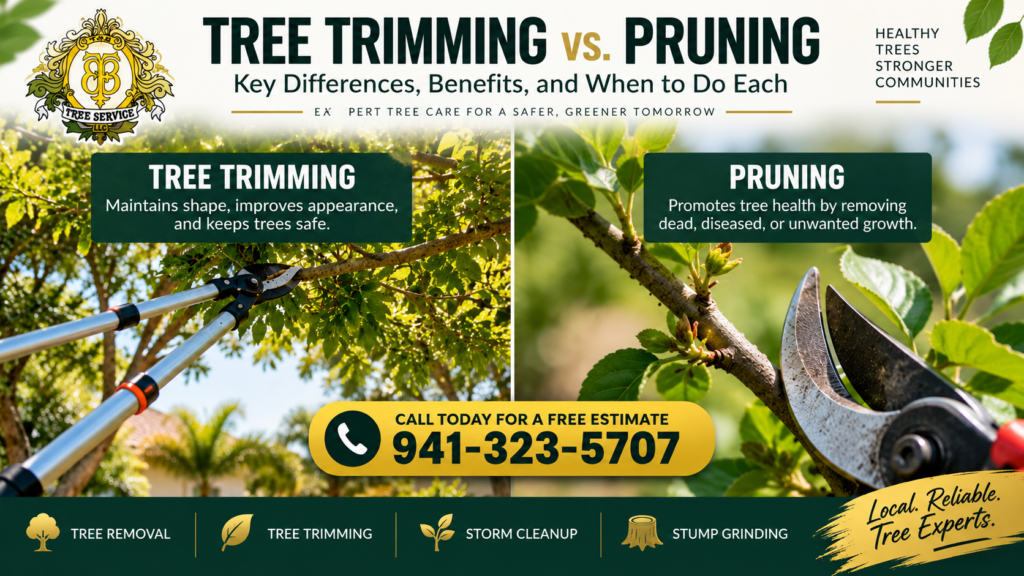
Tree Trimming
Usually focuses on shape, size, clearance, and appearance. It is commonly used to manage overgrowth or keep branches away from structures, driveways, sidewalks, and other areas.
Tree Pruning
Usually focuses on health, structure, and safety. It involves more selective cuts to remove dead, damaged, diseased, weak, crossing, or poorly positioned growth.
Table of Contents
What Is Tree Trimming?
Tree trimming generally means removing excess or unwanted growth to maintain a desired shape, size, or clearance. It is commonly performed on trees, shrubs, hedges, and ornamental plants that have become overgrown or are extending into places where the growth is not wanted.
A tree may need trimming when branches begin growing too close to a roof, driveway, walkway, fence, parking area, or another part of the landscape. Trimming can also help maintain a cleaner appearance and keep fast-growing vegetation more manageable.
Common reasons for trimming:
- Control the overall size or shape of a tree or plant
- Maintain clearance around buildings, driveways, sidewalks, fences, and other areas
- Remove excessive or unwanted growth
- Improve the appearance of landscaping
- Keep shrubs, hedges, and ornamental plants neat and manageable
What Is Tree Pruning?
Pruning is more selective. Instead of simply cutting back growth, pruning involves identifying particular branches or stems that should be removed to improve the plant’s health, structure, or safety.
This may include dead, damaged, diseased, weak, or poorly positioned branches. Pruning can also address branches that cross or rub against each other and can help improve the structure of a developing tree.
Remove growth that is no longer healthy or structurally sound.
Address limbs that rub together or grow in poor positions.
Help guide healthier, safer development when appropriate.
Not Sure Whether Your Tree Needs Trimming or Pruning?
T.B.B Tree Service can evaluate the tree and recommend the right approach based on its condition, location, growth, and safety concerns.
Trimming vs. Pruning: What Is the Main Difference?
The easiest way to remember the difference is to think about the purpose of the work.
Trimming is generally about managing growth, clearance, shape, and appearance. Pruning is generally about making deliberate cuts for health, structure, and safety.
There is naturally some overlap. A tree service may remove an unhealthy branch while also trimming other growth away from a structure during the same visit. The important point is that each cut should have a purpose rather than removing branches indiscriminately.
Can Improper Trimming or Pruning Damage a Tree?
Yes. Removing too much growth, making poor cuts, or cutting branches without considering the tree’s structure can create unnecessary stress and may leave the tree more vulnerable to future problems. Large or poorly placed cuts can also change how the tree responds as it grows.
One especially aggressive practice is indiscriminately cutting back major branches simply to reduce the height of a tree. Proper tree care should consider the tree species, condition, location, branch structure, and the reason the work is needed before cuts are made.
When Should Trees Be Trimmed or Pruned?
There is no single schedule that is ideal for every tree or plant. Appropriate timing depends on the species, condition of the tree, type of work being performed, and the reason branches need to be removed.
Dead, damaged, or hazardous limbs may need attention when they are discovered. Other pruning may be better planned around the tree’s growth cycle and local conditions. In Florida, trees also deal with year-round growth, heavy rain, wind, and tropical weather, making routine inspection especially important.
What About Palms, Shrubs, and Landscape Plants?
Palm Trees
Palms grow differently from typical branching trees. Maintenance generally focuses on removing dead or declining fronds and other material when appropriate, rather than shaping the palm like a hardwood tree. Excessive removal of healthy green fronds can be counterproductive.
Shrubs & Hedges
Hedges and shrubs are frequently trimmed to maintain size and shape, while selective pruning may remove damaged stems, improve structure, or encourage healthier growth.
Flowering Plants
Flowering landscape plants can have different pruning requirements depending on when and how they bloom, so timing can matter.
How Do You Know Which Service Your Tree Needs?
If your main concern is overgrowth, appearance, or clearance, you are probably thinking about trimming. If you are concerned about dead branches, damaged limbs, structural problems, or tree health, pruning is likely the more accurate term.
You do not need to know the exact terminology before calling a tree service. A professional can evaluate the tree, determine why work is needed, and recommend the appropriate type of cutting.
Professional Tree Trimming and Pruning in Sarasota, Florida
T.B.B Tree Service provides professional tree trimming and pruning services in Sarasota and surrounding areas. Whether you need overgrown branches trimmed away from your property or selective pruning to address damaged or problematic limbs, the goal is to perform the work carefully and with the tree’s long-term condition in mind.
If you are unsure what your tree or landscape plant needs, contact T.B.B Tree Service for an evaluation and free estimate.
Frequently Asked Questions
Is trimming the same thing as pruning?
Not exactly. Trimming usually focuses on controlling growth, shape, appearance, or clearance. Pruning is generally more selective and focuses on tree health, structure, or safety.
Is pruning only for trees?
No. Shrubs, ornamental plants, and many other landscape plants can also benefit from selective pruning.
Can dead branches be removed at any time?
Dead or hazardous branches may require attention when they are identified. The appropriate approach still depends on the tree, branch, surrounding conditions, and safety considerations.
How often should a tree be trimmed?
There is no universal trimming schedule. Species, age, location, growth rate, condition, clearance needs, and previous maintenance all affect how frequently a tree should be evaluated or trimmed.
Need Tree Trimming or Pruning in Sarasota?
Call or text T.B.B Tree Service to discuss your tree and schedule a free estimate.