
Tree Fell on Your Carport: Emergency Removal, Damage, and Insurance
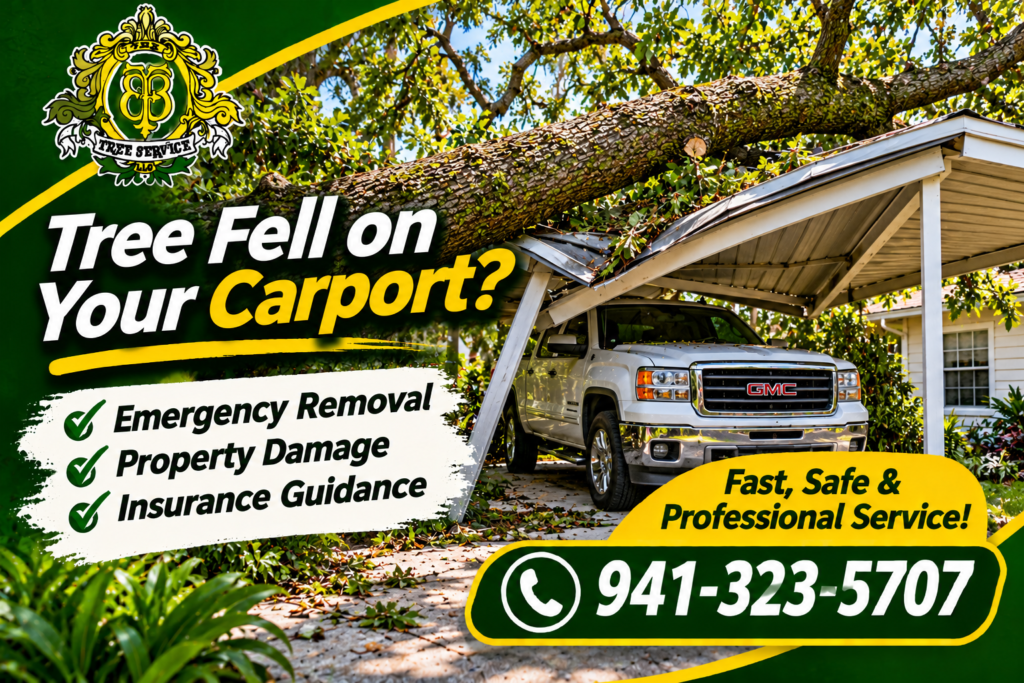
Tree Fell on Your Carport: Emergency Removal, Damage, and Insurance
A complete guide for Sarasota and Manatee County homeowners dealing with fallen trees, damaged carports, trapped vehicles, and repair decisions.
Tree Fell on Your Carport: What to Do Immediately
A tree resting on a carport may have damaged the roof, support posts, anchoring, and any vehicle beneath it. Keep people and pets away from the structure. Do not walk under the roof or attempt to retrieve a car, bicycle, or tools. If someone is trapped or injured, call emergency services. The carport can shift as branches settle, especially if the tree remains attached to a standing trunk.
From a safe position, note whether the tree touches power lines, the house, or adjacent structures. Contact a qualified tree service for removal planning and a building professional for structural concerns. Avoid treating the carport as stable merely because it has not collapsed.
Why Carports Can Be Especially Vulnerable
Many carports use lightweight metal roofs supported by posts and anchors. Their framing is intended for design loads, not the concentrated weight of a fallen tree. An impact can bend roof panels, loosen connections, or shift posts without creating an obvious total collapse. A freestanding carport may respond differently from one attached to a house.
The visible damage is only part of the assessment. Fasteners and anchors may have moved, and a damaged roof can transfer weight to remaining posts. Have a qualified structural or building contractor evaluate the enclosure after the tree is safely controlled.
Keep Clear of Bent Support Posts
A bent post may still support some of the tree’s weight. Moving wood or leaning against the frame can change that balance suddenly. Do not straighten posts with a jack, brace them with lumber, or remove panels while the tree is resting overhead.
Tell the tree crew which posts appear displaced and where the trunk is supported. They can account for these points when planning sectional removal. Structural repair should follow assessment by a qualified contractor rather than improvised homeowner adjustments.
Treat Downed Wires as Energized
A tree falling onto a carport can pull down electrical service, outdoor lighting wires, or nearby distribution lines. Do not touch wires, branches contacting them, wet metal framing, or objects in the immediate area. The absence of sparks does not indicate that a conductor is safe.
Keep a substantial distance and contact the utility or emergency responders as appropriate. Electrical hazards must be addressed before ordinary tree cutting. Tree crews should coordinate with the utility rather than assume they can safely remove wood touching conductors.
Do Not Enter to Retrieve Your Vehicle
A vehicle beneath a damaged carport may look unharmed, but the roof and tree can move without warning. Opening a car door or driving out can shake the structure or place someone under a hanging branch. The safest decision is to leave the vehicle in place until access is cleared.
After the tree and carport have been assessed, a tow professional or vehicle owner may be able to move the car under safe conditions. Vehicle damage and carport damage may involve separate insurance coverage and repair providers.
Document the Damage From a Safe Location
Take wide photographs of the tree’s position, damaged roof, displaced posts, and any affected vehicle from outside the hazard zone. Record the date and approximate weather conditions. Preserve earlier photographs showing the carport and tree before the incident when available.
Do not climb onto a neighboring structure or reach beneath the roof for close-up pictures. Contractors can document additional findings when it is safe. Keep estimates and invoices separated by tree removal, carport repairs, and vehicle damage.
What if the Tree Is Still Standing?
A large limb may break off and land on the carport while the main tree remains upright. The remaining crown can have torn attachments or hanging wood. Clearing the fallen branch does not automatically make the tree safe or prove it must be removed entirely.
A qualified tree professional should inspect the remaining tree and evaluate cracks, branch unions, and nearby targets. Appropriate recommendations might include pruning, further evaluation, or removal, depending on the actual condition.
What if the Entire Tree Uprooted?
An uprooted tree may have a raised root plate that can shift as trunk sections are cut. Saturated soil, buried utilities, and nearby foundations complicate the work. Do not stand beside the root mass or attempt to push it back into place.
The removal crew should assess the trunk, root plate, and surrounding structures together. Stump handling, hole filling, and landscape restoration may be separate from clearing the carport. Confirm the scope before work begins.
Heavy Trunk Resting Across the Roof
A trunk can be supported at several locations along the carport roof. Cutting one section can shift its weight to another beam or post, potentially causing a collapse. The wood may also be under tension from attached branches or a partially standing tree.
Qualified crews evaluate support points and choose a controlled sequence. A crane or rigging may be appropriate for certain loads, but equipment selection depends on access and the site. Do not pull the trunk with a truck or winch.
Large Branch Puncturing Metal Panels
A branch may tear through sheet metal, lodge in framing, and remain attached to the tree above. Sharp metal edges and bent panels can create additional injury risks. Pulling the branch out from beneath the roof can cause other sections to fall.
The tree crew should control the branch before it is moved. A carport repair contractor can later evaluate panels, beams, fasteners, and anchors. Replacing only the visibly punctured sheet may not address structural damage.
Hanging Limbs Above the Carport
Storm damage can leave broken limbs suspended in the canopy, sometimes hidden by leaves. Wind or vibration from removal work can dislodge them. The exclusion area should account for the whole damaged tree, not only the branch already on the roof.
A professional should inspect overhead hazards and communicate where people must remain clear. Homeowners should not climb ladders or use long poles to knock limbs loose. The danger may continue after the first fallen branch is removed.
Why DIY Chainsaw Cleanup Is Risky
Bent branches and trunks can store considerable tension. A chainsaw cut may release that tension abruptly, causing wood to spring or roll. Working beside a damaged carport adds unstable framing, sharp metal, and potential electrical hazards.
Even experienced saw users should avoid improvised storm-damage work around structures. A qualified crew can assess load paths and control sections with appropriate methods. Keeping bystanders outside the work zone is essential throughout cutting.
How Professionals Remove Trees From Carports
A removal plan considers tree size, species, branch tension, support points, nearby utilities, and available equipment access. The crew may dismantle smaller branches before moving heavier sections. Controlled lowering helps limit unnecessary impacts on the carport and neighboring property.
Ask for a written description of the work and whether the entire tree or only the fallen section will be removed. Tree cutting does not automatically include roof reconstruction, vehicle towing, or electrical repairs.
When Rigging or Lifting Equipment Helps
Some carport impacts involve logs too heavy to handle manually. Rigging or mechanical lifting may help keep sections from dropping onto remaining framing. However, a crane is not automatically necessary or feasible for every site.
Access, ground conditions, overhead wires, and the position of the trunk determine equipment choices. A contractor should evaluate these conditions on site before proposing a method. Qualified operators and proper planning matter more than equipment size alone.
Avoid Pulling the Tree Off With a Vehicle
Dragging a trunk can tear metal panels, bend support posts, or shift the entire carport. Tow straps, chains, and attachment points can also fail under load. A sudden release can send wood or hardware toward people and nearby buildings.
Do not connect a truck, tractor, or winch to the tree as a shortcut. Controlled removal focuses on where each section will move after cutting or lifting. Professional planning can help reduce additional damage.
Attached Carport Versus Freestanding Carport
An attached carport may share structural elements with a house, so tree impact can affect the adjacent wall, roof edge, or foundation connections. A freestanding carport has independent supports but may still collapse when posts or anchors are damaged.
Tell the estimator whether the carport is attached and identify any visible movement where it meets the house. A qualified building professional should evaluate concerns involving the residence. The tree crew should not make unsupported guarantees about structural safety.
Metal Roof Damage After a Tree Impact
Metal carport panels can crease, puncture, or pull away from their fasteners. Damage may extend into the framing beneath, particularly where a heavy limb landed. Sharp edges and loose panels can remain hazardous even after the tree is removed.
A qualified repair contractor should assess whether individual panels can be replaced or larger sections require reconstruction. Do not climb onto the damaged roof or assume it is safe because it still sheds rain.
Aluminum Carport Frames and Connections
Lightweight aluminum framing may bend under concentrated loads. Connections can loosen or separate while surrounding pieces remain visually straight. The full frame should be evaluated rather than focusing only on the point where the branch struck.
The tree service should avoid relying on damaged frame members for rigging support. A qualified enclosure or building contractor can assess the structure after removal and advise on repair or replacement.
Steel Carport Frames and Anchors
Steel framing can also bend or transfer impact loads into connections and anchors. Rusted fasteners or older installations may require closer examination, but appearance alone does not establish structural capacity. Ground anchors can be disturbed even if the roof seems intact.
Ask the repair professional to evaluate posts, base plates, bolts, and the support surface. Do not straighten a bent frame with a vehicle or jack while the tree remains in place.
Concrete Slab and Driveway Damage
A falling tree may crack concrete or shift nearby pavers. Heavy equipment used for removal can also affect soft ground and driveways if access is not planned. The tree crew should identify practical routes and protect vulnerable areas where possible.
Document existing surface damage safely and discuss equipment placement before work begins. Concrete or paving repairs are usually separate from tree removal. If anchors are embedded in damaged concrete, a qualified contractor should assess their condition.
Vehicles Under a Fallen Carport
Cars, motorcycles, boats, and trailers may be stored beneath carports. Falling branches or roof panels can damage paint, glass, and bodywork. The vehicle may also be trapped by bent framing rather than the tree itself.
Wait for safe clearance before accessing or towing the vehicle. Photograph visible damage from outside the work zone and coordinate with the appropriate insurer. The tree contractor should know the vehicle’s position before dismantling overhead wood.
Boat and RV Carport Damage
Taller carports often shelter boats or recreational vehicles with roofs, antennas, or accessories close to overhead framing. A fallen tree can affect both the shelter and the stored vehicle. Moving either prematurely may shift unstable materials.
Discuss clearances, towing access, and equipment dimensions with the removal crew. A qualified vehicle or marine service provider may be needed after the tree is controlled. Separate damage assessments can help clarify repair needs.
Stored Tools, Fuel, and Batteries
Carports may contain lawn equipment, fuel cans, batteries, and outdoor tools. A tree impact can spill containers or damage electrical devices. Do not enter the area to retrieve belongings while the roof or wood is unstable.
Inform responders and contractors about known flammable or hazardous materials. If there is a significant spill, fire, or other immediate danger, contact emergency services. Tree crews are not substitutes for hazardous-material specialists.
Electrical Lighting and Outlets
Carports often have overhead lighting, outlets, or wiring connected to the house. A tree can damage conduit, fixtures, or junction boxes, leaving hidden electrical hazards. Wet metal surfaces increase concern after a storm.
Do not operate switches or touch damaged fixtures. A qualified electrician should evaluate affected circuits before normal use resumes. Coordinate electrical clearance with the tree-removal plan.
Does Homeowners Insurance Cover Carport Damage?
Coverage depends on the policy, whether the carport is attached or detached, the cause of loss, and applicable limits or exclusions. Some structures may be subject to different provisions from the main dwelling. There is no universal coverage answer.
Report the incident promptly and ask about structural repairs, debris removal, and documentation requirements. Keep estimates and photographs. A tree service can document removal work but cannot guarantee an insurance payment.
Insurance for the Vehicle Beneath the Carport
Damage to a car beneath the structure may be handled differently from damage to the carport. Vehicle insurance coverage depends on the policy and circumstances. Do not assume the homeowner’s policy pays for every damaged vehicle.
Contact the appropriate insurers and preserve separate records for the vehicle, shelter, and tree removal. Arrange towing only after the area is safe. Ask repair providers for written findings.
Who Pays if a Neighbor’s Tree Fell on the Carport?
A tree originating on neighboring property does not automatically make the neighbor legally responsible. The tree’s condition, prior warnings, storm circumstances, and Florida law may all matter. Insurance and liability are separate questions from immediate safety.
Communicate factually, preserve photographs, and obtain permission before crews enter another property. If responsibility is disputed, seek guidance from the insurers or a qualified Florida attorney.
What if the Tree Was Dead Before the Storm?
Dead branches, extensive dieback, or visible decay may be relevant to the tree’s condition before failure. However, such signs do not by themselves prove negligence or establish the exact cause of the incident.
Keep earlier photos and any documented communications about the tree. A qualified tree professional can describe visible findings, while legal and insurance professionals address responsibility. Safety work should not be delayed for a dispute.
What if a Healthy Tree Fell?
Strong winds, saturated soil, and hidden defects can contribute to failure in trees that appeared healthy. The absence of obvious deadwood does not establish that the tree was structurally sound, nor does the failure itself establish negligence.
Focus on controlled removal and reliable documentation. A professional assessment can explain observable conditions without overstating certainty. Insurance and legal conclusions require their own review.
How Much Does Tree Removal From a Carport Cost?
Costs vary with tree size, position, equipment, access, and hazards. A small detached limb resting on a roof differs substantially from a mature oak trunk across a collapsed structure. No single generic price fits all properties.
Request a site-specific written estimate that identifies the work. Carport repairs, vehicle towing, electrical service, and stump grinding may be separate expenses. Compare quotes based on equivalent scopes.
What a Written Tree Removal Estimate Should Include
A useful estimate describes the affected tree, cutting and handling plan, equipment, access, debris hauling, and exclusions. It should clarify whether the entire tree will be removed or only the portion touching the carport.
Ask how unexpected conditions and additional work will be handled. Written expectations are particularly helpful when multiple contractors and an insurer are involved. Confirm who will move any damaged building materials.
Debris Hauling and Site Cleanup
Branches, logs, leaves, and damaged roof panels may be scattered across the driveway. Some tree estimates include hauling while others cover cutting and stacking only. Building debris may require a separate contractor.
Ask where wood will be placed, whether hauling is included, and what the final work area should look like. Cleanup should occur only after overhead hazards have been addressed.
Stump Grinding and Uprooted Roots
Removing the fallen tree does not automatically include stump grinding. An uprooted tree may leave a root plate and a hole that require additional work. Buried electrical, irrigation, or drainage lines may be close to the carport.
Confirm whether grinding, hauling grindings, and backfilling are included. Follow appropriate utility-location procedures before excavation. Avoid disturbing anchors or foundations without professional advice.
Tight Side Yards and Equipment Access
Carports in Sarasota and Manatee County may sit beside fences, landscaping, pools, and narrow driveways. Equipment access can be difficult after heavy rain, especially where soil is soft. Overhead utility lines can limit lifting options.
Tell the estimator about gate widths, pavers, irrigation, septic systems, and known buried services. A site-specific access plan can reduce the risk of secondary damage.
Temporary Weather Protection After Removal
Once the tree is cleared, damaged roof panels may expose vehicles or stored items to rain. Temporary coverings should be installed only when the remaining frame is safe. Do not climb a bent carport to attach a tarp.
A qualified repair or restoration professional can advise on suitable measures. Move property only when safe access is established. Keep records of authorized emergency protection work.
Repairing Versus Replacing the Carport
The decision depends on framing condition, connections, anchors, age, code requirements, and repair scope. Torn roof panels may be replaceable, but displaced posts or bent structural members can require broader work.
A qualified carport or building contractor should evaluate the complete structure after the tree is removed. Ask whether permits or inspections apply. A tree-removal estimate is not a structural repair assessment.
Florida Permits and Local Requirements
Tree removal and carport reconstruction may be governed by different local requirements. Rules vary by jurisdiction and property. Emergency damage may affect procedures but does not automatically eliminate every permit or inspection.
Check with the appropriate Sarasota, Bradenton, Manatee County, or other local authority. Qualified contractors can help identify applicable requirements. Preserve photos and written reports when useful.
HOA and Manufactured Home Communities
Carports are common in manufactured home parks, condominiums, and HOA neighborhoods. The structure, tree, or land may be maintained by different parties. Community rules can affect contractor access and repairs.
Review governing documents and contact management when shared areas are involved. Clarify responsibility for nonemergency work while keeping hazardous areas restricted. Do not assume every expense belongs to the same owner.
Preventing Future Tree Damage
Routine ground-level observation can help identify dead branches, new leaning, fresh cracks, and root disturbance. Proper pruning may reduce some conflicts, but no tree can be guaranteed to survive severe weather. Avoid topping or indiscriminate cutting.
Consider mature tree size and carport placement when planning landscaping. A qualified tree professional can recommend species-appropriate care based on the actual trees and nearby targets.
Hurricane Season Preparation
Before storm season, arrange assessment of trees showing concerning changes and address identifiable hazards. Do not rush into dangerous cutting as a storm approaches. After severe weather, keep people away from hanging branches and unstable shelters.
Document damage safely and contact appropriate professionals. Early planning can make recovery more orderly, but even well-maintained trees can fail during major storms.
Local Carport Tree Removal in Southwest Florida
Properties in Sarasota, Bradenton, Lakewood Ranch, Parrish, Palmetto, Venice, and surrounding communities feature varied carport designs and mature trees. Tight lots, sandy soils, heavy rain, and nearby utilities influence removal planning.
A local site assessment helps determine how to control the tree while considering the structure, vehicles, and landscaping. Describe the tree’s size, position, and any known hazards when requesting an estimate.
Final Steps Before Reusing the Carport
Do not resume parking or storage beneath the shelter simply because the tree has been hauled away. Damaged framing, anchors, roof panels, and wiring may still require assessment. The building professional should determine what repairs or restrictions are appropriate.
TBB Tree Service can provide tree-related estimates throughout Sarasota and Manatee County. Carport reconstruction, electrical service, towing, and insurance questions should be handled by the relevant specialists.
Final Takeaway: Control the Tree Before Repairs
A fallen tree on a carport creates hazards involving suspended wood, damaged framing, vehicles, and sometimes electricity. Keep everyone clear, document from a safe distance, and arrange qualified removal. Avoid pulling the tree off or entering beneath a compromised roof.
Coordinate the tree crew with structural, electrical, and vehicle professionals as needed. Written scopes help clarify what each contractor will do. Safe removal is the first step toward restoring the property.
Related TBB Tree Service Guides
Explore trees falling on garages, trees falling on vehicles, trees falling on sheds, trees damaging fences, trees blocking driveways, cracked tree trunks, hanging storm-damaged limbs, and tree removal estimates.
Independent Tree Care and Safety Resources
See OSHA tree care safety, OSHA electrical safety, and UF/IFAS tree care resources for additional guidance. Consult your insurer about coverage and qualified contractors about structural repairs.
Frequently Asked Questions
Can I move my car after a tree falls on the carport?
Wait until the tree and structure have been assessed and access is safe.
Does insurance cover a tree falling on a carport?
Coverage depends on your policy, structure type, cause of loss, and exclusions.
Who pays if my neighbor’s tree damaged the carport?
Responsibility depends on the circumstances and applicable law, not tree ownership alone.
Can I pull the trunk off with a truck?
No. Uncontrolled movement can cause collapse or injury.
Can the carport be repaired instead of replaced?
Possibly. A qualified building contractor must assess framing, connections, and anchors.
How much does tree removal from a carport cost?
Tree size, access, equipment, and hazards determine the site-specific estimate.
Will the tree service repair the metal roof?
Tree removal and carport repairs are normally separate services.
Is stump grinding included in removal?
Not necessarily; confirm it in the written scope.
What if electrical wires were damaged?
Keep away and contact the utility or qualified electrician as appropriate.
Should I inspect the remaining tree?
Yes, especially if there are torn attachments, cracks, new leaning, or hanging branches.