Tree Fell on Your Deck: Emergency Removal, Damage, and Insurance
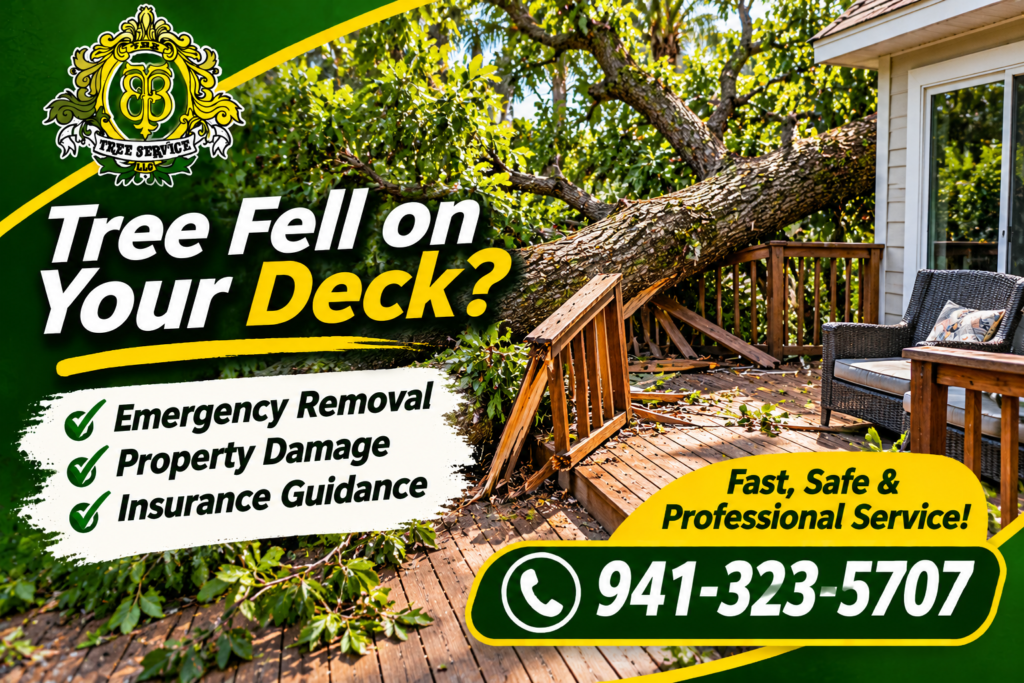
Tree Fell on Your Deck: Emergency Removal, Damage, and Insurance
What Sarasota and Manatee County homeowners should know about fallen trees, damaged decks, safe removal, and rebuilding.
First steps after a tree hits your deck
Keep people and pets away from the deck and the surrounding yard. Broken boards and beams can give way without warning, especially where a trunk is resting across a railing or support post. If anyone is injured or trapped, contact emergency services. Otherwise, photograph the scene from solid ground and arrange qualified tree removal and structural assessment before attempting to retrieve belongings.
On a property with an elevated deck, the position of each branch matters. The fallen tree may be resting against railings, posts, or the house itself, and these supports can change as sections are removed. An experienced crew should establish a work zone and explain the sequence before cutting. People should remain outside the area throughout the operation.
Why a deck can collapse after impact
Decks depend on joists, beams, posts, ledgers, and connections that work together. A tree impact may damage components far from the obvious hole, particularly where the frame attaches to the house. Do not assume that a deck is sound simply because the surface remains level. A building professional should inspect the load path and connections before anyone walks on it.
Southwest Florida storms often bring heavy rain and wind, which can soften ground and make access difficult. Narrow side yards, fences, pool enclosures, and landscaping may limit where lifting equipment can operate. A contractor should inspect the actual site instead of relying on a single photograph. Clear communication about these constraints helps avoid secondary damage.
Do not walk beneath an elevated deck
An elevated deck can contain fractured joists and loosened fasteners that are hidden by decking. A tree or broken rail may be holding up part of the damaged assembly. Keep the area below closed until the wood is controlled and the structure assessed. Never enter beneath a suspended trunk to recover furniture or yard equipment.
Tree removal, structural restoration, and insurance documentation serve different purposes. A tree contractor handles the wood; a qualified building professional evaluates the deck; and an electrician addresses damaged circuits. Written scopes help homeowners coordinate these trades. Avoid assuming that an estimate for one service includes the others.
What to do when the tree is still moving
Wind, saturated soil, and shifting root plates can cause a fallen tree to settle after the first impact. Even a seemingly motionless limb may be under tension. Stay outside the possible movement zone. Do not pull branches, shake railings, or climb onto the deck to test whether it feels stable.
Before moving any wood, consider whether another part of the tree is still attached or suspended. Stored tension can cause sudden movement, and a partially supported trunk can roll when a cut changes its balance. Do not test the deck by walking on it or pull wood with improvised equipment. Professional control of each section is important.
Electrical hazards around outdoor decks
Decks often have lighting, outlets, hot tub connections, and nearby service wiring. A falling tree can tear conduit or bring down energized conductors. Avoid touching wires, metal rails, and wet fixtures. Notify the utility about downed lines and have qualified electrical personnel assess damaged circuits.
Keep a record of photographs, dates, estimates, and contractor observations, but collect evidence only from safe positions. Insurance terms vary, and liability may depend on facts not visible at the scene. Ask the insurer about documentation and mitigation requirements. The immediate priority remains preventing injury and additional property damage.
Photograph damage without entering the hazard zone
Take wide photographs showing the tree, deck, house connection, and nearby structures from a safe location. Record the date and any visible storm conditions. Save earlier photos and written contractor observations. Never use a ladder or unstable staircase to obtain close-ups for an insurance claim.
On a property with an elevated deck, the position of each branch matters. The fallen tree may be resting against railings, posts, or the house itself, and these supports can change as sections are removed. An experienced crew should establish a work zone and explain the sequence before cutting. People should remain outside the area throughout the operation.
Tree trunk resting on deck boards
A large trunk can spread weight across several joists while concentrating force on a few boards. Cutting one section may cause the remaining wood to roll or settle. Professional crews evaluate where the trunk is supported before deciding on a cutting sequence. Homeowners should not use a vehicle or winch to pull it away.
Southwest Florida storms often bring heavy rain and wind, which can soften ground and make access difficult. Narrow side yards, fences, pool enclosures, and landscaping may limit where lifting equipment can operate. A contractor should inspect the actual site instead of relying on a single photograph. Clear communication about these constraints helps avoid secondary damage.
Heavy branches through deck railings
Railings are not designed to hold a fallen tree. A branch can bend posts, tear fasteners, and leave jagged wood or metal in the walking area. The crew should control the branch before moving it. A qualified deck contractor should later inspect railing attachments and determine whether replacement is necessary.
Tree removal, structural restoration, and insurance documentation serve different purposes. A tree contractor handles the wood; a qualified building professional evaluates the deck; and an electrician addresses damaged circuits. Written scopes help homeowners coordinate these trades. Avoid assuming that an estimate for one service includes the others.
Broken stairs and access points
Deck stairs can separate from landings or shift when posts move. A stairway may appear usable while its connectors are compromised. Do not use damaged steps to reach the deck. Establish access from safe ground for professionals and keep children away from the staircase.
Before moving any wood, consider whether another part of the tree is still attached or suspended. Stored tension can cause sudden movement, and a partially supported trunk can roll when a cut changes its balance. Do not test the deck by walking on it or pull wood with improvised equipment. Professional control of each section is important.
Damage to deck ledger boards
A ledger attaches many decks to the house and transfers substantial loads. Impact can damage the ledger, fasteners, flashing, or adjacent wall. A building professional should evaluate this connection. Tree crews should not use the ledger or damaged deck framing as a rigging anchor.
Keep a record of photographs, dates, estimates, and contractor observations, but collect evidence only from safe positions. Insurance terms vary, and liability may depend on facts not visible at the scene. Ask the insurer about documentation and mitigation requirements. The immediate priority remains preventing injury and additional property damage.
Freestanding deck damage
Freestanding decks have independent support systems but can still lose stability if posts, beams, or footings move. A falling tree may damage several supports at once. Inspecting the deck surface alone is insufficient. A qualified contractor should assess framing, foundations, and lateral stability after removal.
On a property with an elevated deck, the position of each branch matters. The fallen tree may be resting against railings, posts, or the house itself, and these supports can change as sections are removed. An experienced crew should establish a work zone and explain the sequence before cutting. People should remain outside the area throughout the operation.
Pressure-treated wood deck repairs
Pressure-treated lumber can split along grain or fracture around fasteners. Moisture and prior deterioration may influence repair options. Damaged members should be evaluated for replacement by a qualified contractor. Refastening a cracked beam without assessing the load path may not restore safe use.
Southwest Florida storms often bring heavy rain and wind, which can soften ground and make access difficult. Narrow side yards, fences, pool enclosures, and landscaping may limit where lifting equipment can operate. A contractor should inspect the actual site instead of relying on a single photograph. Clear communication about these constraints helps avoid secondary damage.
Composite deck boards and hidden damage
Composite decking can crack, deform, or pull away from clips during impact. The framing beneath may be more seriously damaged than the visible surface. A deck professional should evaluate the underlying structure and manufacturer-compatible repairs. Do not treat replacing surface boards as a complete structural solution.
Tree removal, structural restoration, and insurance documentation serve different purposes. A tree contractor handles the wood; a qualified building professional evaluates the deck; and an electrician addresses damaged circuits. Written scopes help homeowners coordinate these trades. Avoid assuming that an estimate for one service includes the others.
PVC deck boards and railings
PVC decking and trim can fracture or separate at fasteners when struck by heavy wood. Cosmetic damage may coexist with hidden joist damage. Ask a qualified contractor to inspect both the surface system and structural framing. The tree crew should avoid dragging logs across remaining boards.
Before moving any wood, consider whether another part of the tree is still attached or suspended. Stored tension can cause sudden movement, and a partially supported trunk can roll when a cut changes its balance. Do not test the deck by walking on it or pull wood with improvised equipment. Professional control of each section is important.
Metal deck railings
Aluminum and steel railings may bend or loosen at their post bases. A damaged rail cannot be relied on for fall protection. Keep the deck closed until the railing and connections are evaluated. Never attach ropes or lifting equipment to bent railings.
Keep a record of photographs, dates, estimates, and contractor observations, but collect evidence only from safe positions. Insurance terms vary, and liability may depend on facts not visible at the scene. Ask the insurer about documentation and mitigation requirements. The immediate priority remains preventing injury and additional property damage.
Deck posts shifted by tree impact
A trunk can knock posts out of alignment or damage brackets at the footing. An elevated deck may then transfer loads onto remaining supports. Do not try to straighten posts with a jack or truck. A qualified structural or deck contractor should determine appropriate stabilization and repairs.
On a property with an elevated deck, the position of each branch matters. The fallen tree may be resting against railings, posts, or the house itself, and these supports can change as sections are removed. An experienced crew should establish a work zone and explain the sequence before cutting. People should remain outside the area throughout the operation.
Concrete footings and soil movement
Tree roots and heavy impacts can disturb soil around deck foundations. Footings may crack or shift, particularly after heavy rainfall. The repair assessment should include the support conditions below the deck. Excavation and stump work near footings require careful planning.
Southwest Florida storms often bring heavy rain and wind, which can soften ground and make access difficult. Narrow side yards, fences, pool enclosures, and landscaping may limit where lifting equipment can operate. A contractor should inspect the actual site instead of relying on a single photograph. Clear communication about these constraints helps avoid secondary damage.
Tree roots beside deck foundations
A fallen tree may lift a root plate near posts, pavers, or buried utilities. Cutting the trunk can cause the root mass to move unexpectedly. Stay clear of the root plate and identify underground services before grinding or excavation. Stump removal may be a separate project.
Tree removal, structural restoration, and insurance documentation serve different purposes. A tree contractor handles the wood; a qualified building professional evaluates the deck; and an electrician addresses damaged circuits. Written scopes help homeowners coordinate these trades. Avoid assuming that an estimate for one service includes the others.
Branches still hanging over the deck
A tree that lost one limb may have other broken branches suspended overhead. These hazards can fall during cleanup or after the wind returns. A qualified tree professional should assess the remaining canopy. The work zone should include the possible drop area beyond the deck itself.
Before moving any wood, consider whether another part of the tree is still attached or suspended. Stored tension can cause sudden movement, and a partially supported trunk can roll when a cut changes its balance. Do not test the deck by walking on it or pull wood with improvised equipment. Professional control of each section is important.
When the tree also struck the house
A branch may hit the deck and adjacent siding, windows, roof, or wall connections. The building may have hidden structural or weatherproofing damage. Coordinate a building assessment with the tree removal. Do not assume the tree crew can certify the house safe or repair damaged flashing.
Keep a record of photographs, dates, estimates, and contractor observations, but collect evidence only from safe positions. Insurance terms vary, and liability may depend on facts not visible at the scene. Ask the insurer about documentation and mitigation requirements. The immediate priority remains preventing injury and additional property damage.
Deck damage near a swimming pool
A deck beside a pool can involve wet surfaces, electrical equipment, and nearby screen enclosures. Tree debris may also enter the water. Keep the pool closed while overhead hazards remain. Pool and electrical specialists may be needed after the wood is controlled.
On a property with an elevated deck, the position of each branch matters. The fallen tree may be resting against railings, posts, or the house itself, and these supports can change as sections are removed. An experienced crew should establish a work zone and explain the sequence before cutting. People should remain outside the area throughout the operation.
Hot tubs and spas on damaged decks
A hot tub adds substantial weight and often has dedicated electrical connections. A tree impact can damage the deck beneath the spa or its power supply. Do not drain, move, or operate the spa while the structure is unstable. Qualified structural and electrical professionals should determine safe next steps.
Southwest Florida storms often bring heavy rain and wind, which can soften ground and make access difficult. Narrow side yards, fences, pool enclosures, and landscaping may limit where lifting equipment can operate. A contractor should inspect the actual site instead of relying on a single photograph. Clear communication about these constraints helps avoid secondary damage.
Outdoor kitchens and grills
Decks may hold grills, gas cylinders, and cooking appliances. Falling wood can damage fuel connections or create fire hazards. If a gas leak is suspected, leave the area and contact appropriate emergency personnel. Do not operate appliances until qualified assessment.
Tree removal, structural restoration, and insurance documentation serve different purposes. A tree contractor handles the wood; a qualified building professional evaluates the deck; and an electrician addresses damaged circuits. Written scopes help homeowners coordinate these trades. Avoid assuming that an estimate for one service includes the others.
Furniture and belongings trapped on the deck
Patio furniture, planters, and personal items can be crushed or blocked by fallen limbs. Recovering them too early places people on unsafe framing. Leave belongings until the area is cleared. Document visible damage from a safe location and discuss salvage with the appropriate professionals.
Before moving any wood, consider whether another part of the tree is still attached or suspended. Stored tension can cause sudden movement, and a partially supported trunk can roll when a cut changes its balance. Do not test the deck by walking on it or pull wood with improvised equipment. Professional control of each section is important.
Why chainsaw removal is dangerous
Storm-damaged branches can contain stored tension that releases when cut. A log may roll toward the house or break through weakened decking. Do not cut from the deck, a ladder, or beneath a suspended section. A qualified tree crew should plan and control each movement.
Keep a record of photographs, dates, estimates, and contractor observations, but collect evidence only from safe positions. Insurance terms vary, and liability may depend on facts not visible at the scene. Ask the insurer about documentation and mitigation requirements. The immediate priority remains preventing injury and additional property damage.
Why pulling the tree with a truck is unsafe
Tow straps and chains can create uncontrolled forces. Dragging a trunk across a deck can tear joists, railings, and house connections. Mechanical lifting or controlled dismantling may be safer depending on the site. Avoid improvised recovery even when the wood looks manageable.
On a property with an elevated deck, the position of each branch matters. The fallen tree may be resting against railings, posts, or the house itself, and these supports can change as sections are removed. An experienced crew should establish a work zone and explain the sequence before cutting. People should remain outside the area throughout the operation.
How a professional tree crew plans removal
The crew assesses weight, tension, tree condition, deck height, access, utilities, and surrounding structures. Smaller branches may be removed before larger sections. Ask how the crew will protect adjacent property and what the estimate includes. Tree cutting and structural repairs are separate scopes.
Southwest Florida storms often bring heavy rain and wind, which can soften ground and make access difficult. Narrow side yards, fences, pool enclosures, and landscaping may limit where lifting equipment can operate. A contractor should inspect the actual site instead of relying on a single photograph. Clear communication about these constraints helps avoid secondary damage.
When rigging or a crane may be needed
Heavy sections may require ropes, mechanical lifting, or crane assistance to avoid dropping additional weight on the deck. Equipment choice depends on access and load. Not every job requires a crane. Qualified operators should evaluate overhead lines, ground conditions, and available lifting positions.
Tree removal, structural restoration, and insurance documentation serve different purposes. A tree contractor handles the wood; a qualified building professional evaluates the deck; and an electrician addresses damaged circuits. Written scopes help homeowners coordinate these trades. Avoid assuming that an estimate for one service includes the others.
Narrow backyard access in Sarasota
Many local decks sit behind fences or pool cages with narrow side yards. Heavy equipment may not reach the tree directly. Tell the estimator about gates, irrigation, pavers, septic systems, and soft ground. Access limitations can affect equipment selection and cleanup.
Before moving any wood, consider whether another part of the tree is still attached or suspended. Stored tension can cause sudden movement, and a partially supported trunk can roll when a cut changes its balance. Do not test the deck by walking on it or pull wood with improvised equipment. Professional control of each section is important.
Protecting landscaping during removal
Moving logs and machinery can affect lawns, pavers, fences, and planting beds. The crew should consider practical routes and landing areas. Photograph existing damage from safe ground and discuss reasonable protection measures. No removal method can guarantee zero incidental impact.
Keep a record of photographs, dates, estimates, and contractor observations, but collect evidence only from safe positions. Insurance terms vary, and liability may depend on facts not visible at the scene. Ask the insurer about documentation and mitigation requirements. The immediate priority remains preventing injury and additional property damage.
Does homeowners insurance cover deck damage
Coverage depends on policy terms, the cause of loss, whether the deck is attached, and applicable limits or exclusions. Ask the insurer specifically about structural repairs, tree debris removal, and emergency mitigation. Keep written estimates for each trade.
On a property with an elevated deck, the position of each branch matters. The fallen tree may be resting against railings, posts, or the house itself, and these supports can change as sections are removed. An experienced crew should establish a work zone and explain the sequence before cutting. People should remain outside the area throughout the operation.
What if a neighbor’s tree fell on the deck
A tree originating next door does not automatically establish the neighbor’s legal responsibility. Prior condition, warnings, and storm circumstances may matter. Document facts without assigning blame. Consult insurers or qualified Florida counsel if responsibility is disputed, and obtain permission for access to neighboring land.
Southwest Florida storms often bring heavy rain and wind, which can soften ground and make access difficult. Narrow side yards, fences, pool enclosures, and landscaping may limit where lifting equipment can operate. A contractor should inspect the actual site instead of relying on a single photograph. Clear communication about these constraints helps avoid secondary damage.
What if the tree was dead beforehand
Visible deadwood, decay, or prior warnings can be relevant to an investigation. These facts do not by themselves prove negligence or explain every cause of failure. Preserve earlier photographs and communications when available. A tree professional may document visible conditions while legal specialists address liability.
Tree removal, structural restoration, and insurance documentation serve different purposes. A tree contractor handles the wood; a qualified building professional evaluates the deck; and an electrician addresses damaged circuits. Written scopes help homeowners coordinate these trades. Avoid assuming that an estimate for one service includes the others.
What if a healthy tree fell in a storm
Strong winds, saturated soil, and hidden defects can cause failures in trees that appeared healthy. Post-storm photographs may not reveal the complete cause. Focus first on hazard control and factual documentation. Avoid definitive claims about fault without supporting evidence.
Before moving any wood, consider whether another part of the tree is still attached or suspended. Stored tension can cause sudden movement, and a partially supported trunk can roll when a cut changes its balance. Do not test the deck by walking on it or pull wood with improvised equipment. Professional control of each section is important.
How much tree removal from a deck costs
Cost depends on tree size, position, deck height, equipment, access, and hazards. A small branch across a railing is different from a mature trunk on an elevated deck. Request a site-specific written estimate. Deck repairs, electrical work, and stump grinding may be separate expenses.
Keep a record of photographs, dates, estimates, and contractor observations, but collect evidence only from safe positions. Insurance terms vary, and liability may depend on facts not visible at the scene. Ask the insurer about documentation and mitigation requirements. The immediate priority remains preventing injury and additional property damage.
What a written removal estimate should include
The quote should identify the affected tree, cutting scope, access route, equipment, debris handling, and exclusions. Clarify whether the entire tree or only fallen sections will be removed. Discuss how unexpected hazards and revised work will be authorized.
On a property with an elevated deck, the position of each branch matters. The fallen tree may be resting against railings, posts, or the house itself, and these supports can change as sections are removed. An experienced crew should establish a work zone and explain the sequence before cutting. People should remain outside the area throughout the operation.
Debris hauling and final cleanup
Tree branches, logs, leaves, and broken deck materials may be mixed together. Some tree quotes include hauling; others include only cutting and stacking. Ask where debris will be placed and who removes damaged building materials. Keep the area restricted until overhead hazards are addressed.
Southwest Florida storms often bring heavy rain and wind, which can soften ground and make access difficult. Narrow side yards, fences, pool enclosures, and landscaping may limit where lifting equipment can operate. A contractor should inspect the actual site instead of relying on a single photograph. Clear communication about these constraints helps avoid secondary damage.
Stump grinding after a fallen tree
Stump grinding is not automatically included in tree removal. Uprooted trees may leave root plates and holes near deck foundations. Identify buried utilities before excavation and clarify grinding, hauling, and backfilling in writing. Avoid disturbing deck footings without professional advice.
Tree removal, structural restoration, and insurance documentation serve different purposes. A tree contractor handles the wood; a qualified building professional evaluates the deck; and an electrician addresses damaged circuits. Written scopes help homeowners coordinate these trades. Avoid assuming that an estimate for one service includes the others.
Repairing versus rebuilding the deck
The decision depends on damage to joists, beams, ledgers, posts, footings, and railings. Replacing boards alone may not restore structural capacity. A qualified deck or building contractor should evaluate the complete assembly and applicable permit requirements before work begins.
Before moving any wood, consider whether another part of the tree is still attached or suspended. Stored tension can cause sudden movement, and a partially supported trunk can roll when a cut changes its balance. Do not test the deck by walking on it or pull wood with improvised equipment. Professional control of each section is important.
Temporary weather protection
A tree impact may damage siding, doors, or roof edges near an attached deck. Temporary coverings can be useful only where safe access is established. Do not climb damaged framing to install tarps. A qualified restoration or roofing contractor should determine appropriate protection.
Keep a record of photographs, dates, estimates, and contractor observations, but collect evidence only from safe positions. Insurance terms vary, and liability may depend on facts not visible at the scene. Ask the insurer about documentation and mitigation requirements. The immediate priority remains preventing injury and additional property damage.
Permits for tree and deck work
Tree removal and deck reconstruction may involve separate local requirements. Emergency circumstances do not automatically eliminate every permit or inspection. Verify current rules with the appropriate Sarasota, Bradenton, or Manatee County authority and qualified contractors.
On a property with an elevated deck, the position of each branch matters. The fallen tree may be resting against railings, posts, or the house itself, and these supports can change as sections are removed. An experienced crew should establish a work zone and explain the sequence before cutting. People should remain outside the area throughout the operation.
HOA and condominium decks
Decks in shared communities may involve association maintenance, limited common elements, or special access rules. Ownership and insurance responsibility can vary. Notify management where shared property is involved. Keep unsafe areas closed while authorization and repair responsibilities are clarified.
Southwest Florida storms often bring heavy rain and wind, which can soften ground and make access difficult. Narrow side yards, fences, pool enclosures, and landscaping may limit where lifting equipment can operate. A contractor should inspect the actual site instead of relying on a single photograph. Clear communication about these constraints helps avoid secondary damage.
Preventing future tree damage to decks
Routine observation can identify dead branches, fresh cracks, new leaning, or root disturbance. Appropriate pruning may reduce some conflicts. No tree care program guarantees hurricane resistance. Avoid topping or excessive pruning and seek species-appropriate professional advice.
Tree removal, structural restoration, and insurance documentation serve different purposes. A tree contractor handles the wood; a qualified building professional evaluates the deck; and an electrician addresses damaged circuits. Written scopes help homeowners coordinate these trades. Avoid assuming that an estimate for one service includes the others.
Hurricane season preparation
Before storms, assess trees showing significant changes and secure movable outdoor items when safe. Avoid last-minute climbing or dangerous cutting. After storms, keep clear of hanging branches and unstable structures. Arrange qualified cleanup before returning to the deck.
Before moving any wood, consider whether another part of the tree is still attached or suspended. Stored tension can cause sudden movement, and a partially supported trunk can roll when a cut changes its balance. Do not test the deck by walking on it or pull wood with improvised equipment. Professional control of each section is important.
Southwest Florida tree and deck conditions
Sarasota, Bradenton, Lakewood Ranch, Parrish, Palmetto, and Venice properties vary in tree species, deck construction, and access. Heavy rain can complicate equipment placement. A site-specific assessment is important because a removal method that works on one property may be unsuitable for another.
Keep a record of photographs, dates, estimates, and contractor observations, but collect evidence only from safe positions. Insurance terms vary, and liability may depend on facts not visible at the scene. Ask the insurer about documentation and mitigation requirements. The immediate priority remains preventing injury and additional property damage.
Final checklist before using the deck again
Tree removal does not automatically make a damaged deck safe. Framing, railings, stairs, and electrical components may still need inspection and repairs. Keep the deck closed until appropriate professionals have assessed the remaining hazards. TBB Tree Service can discuss tree-related removal estimates locally.
On a property with an elevated deck, the position of each branch matters. The fallen tree may be resting against railings, posts, or the house itself, and these supports can change as sections are removed. An experienced crew should establish a work zone and explain the sequence before cutting. People should remain outside the area throughout the operation.
Related TBB Tree Service Guides
trees on pergolas, trees on carports, trees on fences, trees on sheds, trees on pool cages, hanging storm limbs, cracked tree trunks, free tree service estimates.
Independent Tree and Electrical Safety Resources
Review OSHA tree care safety, OSHA electrical safety, and UF/IFAS tree care guidance.
Frequently Asked Questions
Can I walk on my deck after a tree falls on it?
Avoid using it until the tree and structural damage have been assessed.
Does homeowners insurance cover deck damage?
Coverage depends on the policy, cause of loss, and structure.
Who pays if my neighbor’s tree hit the deck?
Responsibility depends on the facts and applicable law.
Can a deck be repaired after a tree impact?
Possibly. A qualified contractor should inspect framing, connections, and footings.
How much does tree removal from a deck cost?
Size, position, access, equipment, and hazards determine the estimate.
Will the tree service rebuild my deck?
Tree removal and structural repairs are generally separate services.
Can I pull the trunk off with a truck?
No. Uncontrolled movement can cause collapse or injury.
Is stump grinding included?
Confirm it separately in the written estimate.
What if electrical wiring was damaged?
Keep away and contact a qualified electrician or utility as appropriate.
Should the remaining tree be removed?
A qualified tree professional should assess its condition before recommending removal.